Reading 3 of 6 free1776 Club · all 6 storiesFriday, October 2
From the desk
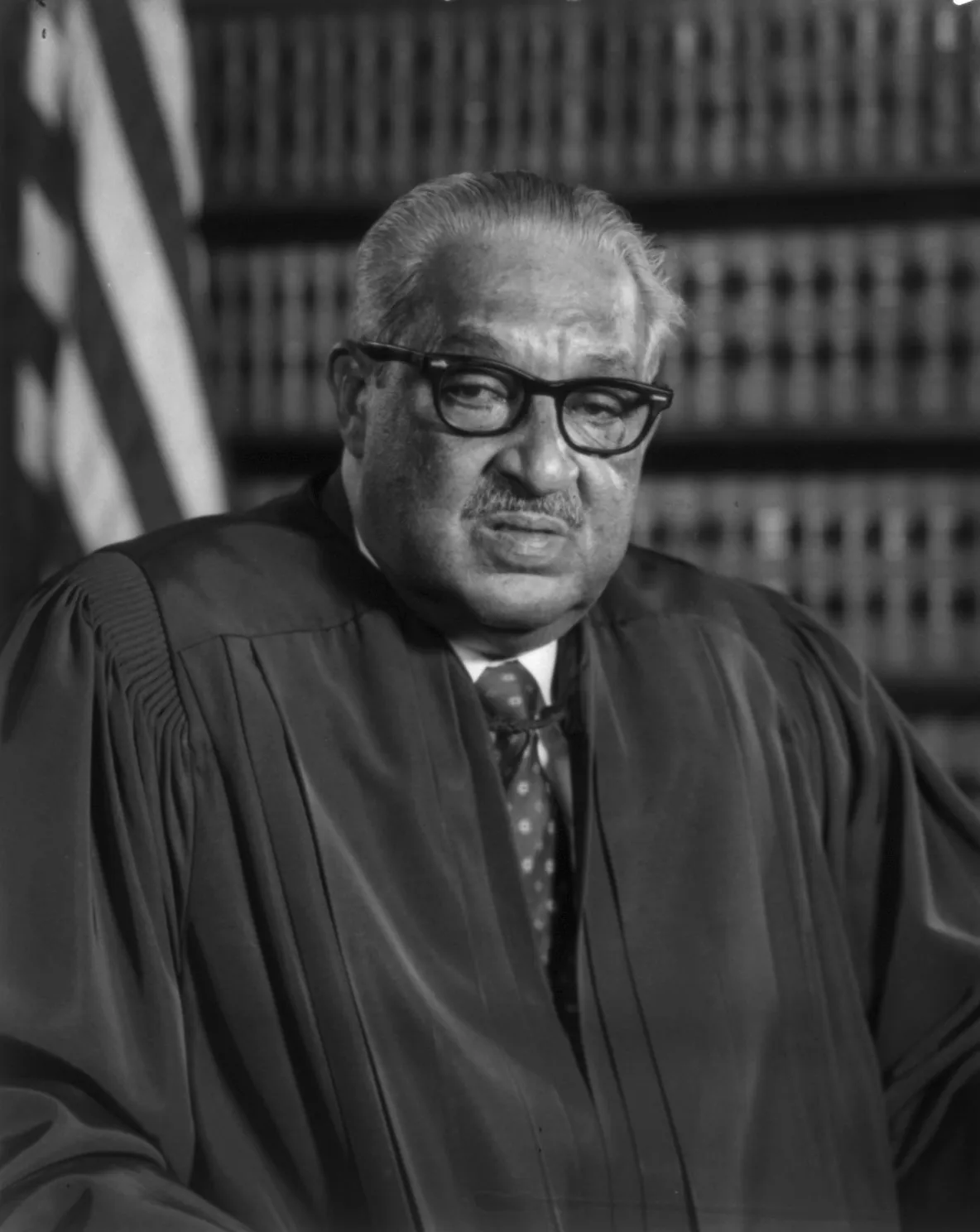
Start with 1789: Washington sending the Bill of Rights to the states, twelve amendments awaiting ratification one legislature at a time. Ten cleared within two years; one, on congressional pay, took two centuries. Worth a longer look is 1967, when Thurgood Marshall, who had already argued Brown v. Board before the Court, took the oath to sit on it. Also here: André's calm walk to the gallows in 1780, and Myers becoming, in 1980, the first House member expelled since the Civil War.
— The Patriot Compass desk
1789Featured · This day in history
Twelve amendments leave Washington's desk, bound for thirteen statehouses
A week after Congress finished its work, President George Washington sent a resolution of twelve proposed amendments to the states for ratification on October 2, 1789. The document carried the signatures of Speaker Frederick Augustus Muhlenberg and Senate President John Adams, who had presided over the Senate during the vote. The states now had to decide, one legislature at a time, which of the twelve would become binding law. Ten cleared that bar within two years. A bill addressing congressional pay waited two centuries more.
The ten amendments the states ratified became the standard against which every American free-speech, search-and-seizure, and due-process claim has since been measured. The Article V process Washington followed, sending the amendments to the states rather than treating Congress's vote as final, is still the process used to amend the Constitution today.
Did you know
QWhy did two Massachusetts delegates come to blows over the ratification debate?
During the Massachusetts ratifying convention of December 1787 and January 1788, Federalist delegate Francis Dana and Anti-Federalist Elbridge Gerry got into a physical fistfight on the floor. Gerry had been one of the loudest voices demanding a bill of rights, having already lost that fight once at the Philadelphia Convention when his motion with George Mason to add one was voted down. Gerry believed the new federal government could swallow individual liberty whole, and the fistfight showed it. Massachusetts eventually resolved its impasse not with fists but with a compromise, ratifying the Constitution while formally recommending amendments. The brawl shows the path to the Bill of Rights ran through shouting matches and shoving, not just committee rooms.
QHow did a congressional election help produce the Bill of Rights?
James Madison only ended up drafting the amendments because he needed votes. Running for a seat in the First Congress against James Monroe, Madison faced a district full of Anti-Federalist voters suspicious of his earlier opposition to a bill of rights. He won them over by publicly promising to introduce amendments himself once elected, then narrowly defeated Monroe. That campaign pledge turned the man who had called a bill of rights merely useful, not essential, into its chief architect in the House. Monroe later served as the fifth president under the government Madison helped secure through that promise.
QWhat centuries-old documents shaped the specific wording Madison chose?
Madison did not invent the Bill of Rights from scratch. He drew directly on four prior texts: the Virginia Declaration of Rights of 1776, the Northwest Ordinance of 1787, England's Bill of Rights of 1689, and Magna Carta from 1215. Each contributed language or concepts about limiting government power and protecting individuals. The lineage stretches back more than five centuries before Washington signed the resolution. Madison effectively compressed English and colonial constitutional history into twelve articles. That borrowing is why some phrases in the Bill of Rights echo English legal guarantees almost word for word.
The Daily Record · free by email
Tomorrow's edition in your inbox — one story, one quote, the flag.
1780military
André hangs at Tappan; he placed the noose himself
For nine days, Major John André had been a prisoner of the army he'd nearly helped defeat at West Point. On October 2, 1780, Continental soldiers led him to a gallows in Tappan, New York, where he placed the noose around his own neck and faced death, by eyewitness accounts, without visible fear. George Washington had refused André's plea to die by firing squad, the death of a soldier rather than a spy. The conspiracy had already collapsed before the hanging, but both armies were startled by how calmly the condemned man had gone.
Washington refused to grant André a soldier's death. The message was plain: treason and espionage would be punished regardless of rank, even though officers like Hamilton had grown to admire the prisoner. That resolve, applied against a man many Americans privately liked, set an early precedent for how the republic intended to treat betrayal from within its own ranks.
Did you know
QHow much money was Benedict Arnold promised for handing over West Point?
Twenty thousand pounds, a fortune in 1780 currency, was the price Arnold negotiated with the British for surrendering the fort and its garrison. He never collected the full sum. The plot collapsed before West Point changed hands, and Arnold fled to a British warship with only a fraction of what he'd been promised, spending the rest of his life as a paid exile, never fully trusted by the cause he'd joined.
QWhat happened to the three militiamen who caught André?
John Paulding, Isaac Van Wart, and David Williams stopped André on the Albany Post Road and searched him out of simple wartime caution, not because they suspected a spy ring. Congress later voted each man a silver medal and a lifetime annuity for the capture, an unusually durable reward for what began as a roadside stop of a stranger in civilian clothes who said the wrong password to the wrong men.
QDid André try to bluff his way past his captors before they searched him?
He did, and it nearly worked. André asked the three militiamen if they belonged to "the lower party," meaning the British, whose lines lay to the south. They said yes, so André dropped his guard and identified himself as a British officer traveling on urgent business, only for the men to reveal they were actually American and detain him on the spot, a single misjudged word that unraveled the entire scheme.
1980government
The House votes 376 to 30 to expel Michael Myers; no member has left this way since the Civil War
The House had not expelled a single member since the Civil War, when it threw out lawmakers for siding with the Confederacy. On October 2, 1980, it broke that streak, voting 376 to 30 to remove Pennsylvania Democrat Michael "Ozzie" Myers. The vote followed his conviction in the FBI's Abscam sting, built on a videotape of Myers pocketing $50,000 from undercover agents. He became the first House member expelled in 114 years, and only the fourth in the chamber's history.
United States House of Representatives, Washington, D.C.Story page →
Expulsion is the Constitution's harshest internal remedy, and the House had used it so rarely that most members in 1980 had never seen it invoked. Myers's case became the modern precedent cited whenever later Congresses weighed expelling a convicted member before an election could remove them.
Did you know
QHow many times had the House expelled a member before Myers?
Only three times in the chamber's entire history, and all three happened within weeks of each other during the Civil War in 1861, when Representatives John B. Clark, John W. Reid, and Henry C. Burnett were thrown out for taking up arms against the Union. Between that purge and Myers's removal in 1980, no member was expelled no matter what scandal or conviction followed — censure and resignation were the tools the House reached for instead. Myers's expulsion was the fourth in American history and the first not tied to the Confederacy.
QWhat happened to the 30 House members who voted against expelling Myers?
The 30 no votes were not a defense of Myers's conduct so much as a fight over precedent: several members argued expulsion should wait until a convicted member's appeals were exhausted, since Myers was still appealing his Abscam conviction when the House voted. Pennsylvania's own delegation split on the question. The dissenters lost, 376 to 30. Later expulsion cases would cite Myers's as precedent for removing members regardless of pending appeals.
QWhat did Myers do for a living after prison, before his second arrest decades later?
Myers opened his own political consulting firm after his release, trading on the same Philadelphia machine connections that had gotten him into Congress in the first place. He spent years working campaigns from the outside rather than running for office again. That consulting work eventually looped back into the ballot-stuffing conspiracy prosecutors charged him with in 2020, built on the same ward-level connections he had cultivated for decades.
$17.76 your first year · then $39.99/yr · cancel anytime
Quote of the day
“Nobody will ever deprive the American people of the right to vote except the American people themselves.”
Franklin D. Roosevelt
“The fate of the country does not depend on how you vote at the polls — the worst man is as strong as the best at that game; it does not depend on what kind of paper you drop into the ballot-box once a year, but on what kind of man you drop from your chamber into the street every morning.”
Henry David Thoreau
“Let me now take a more comprehensive view, and warn you in the most solemn manner against the baneful effects of the spirit of party, generally.”