Reading 3 of 6 free1776 Club · all 6 storiesWednesday, November 11
From the desk
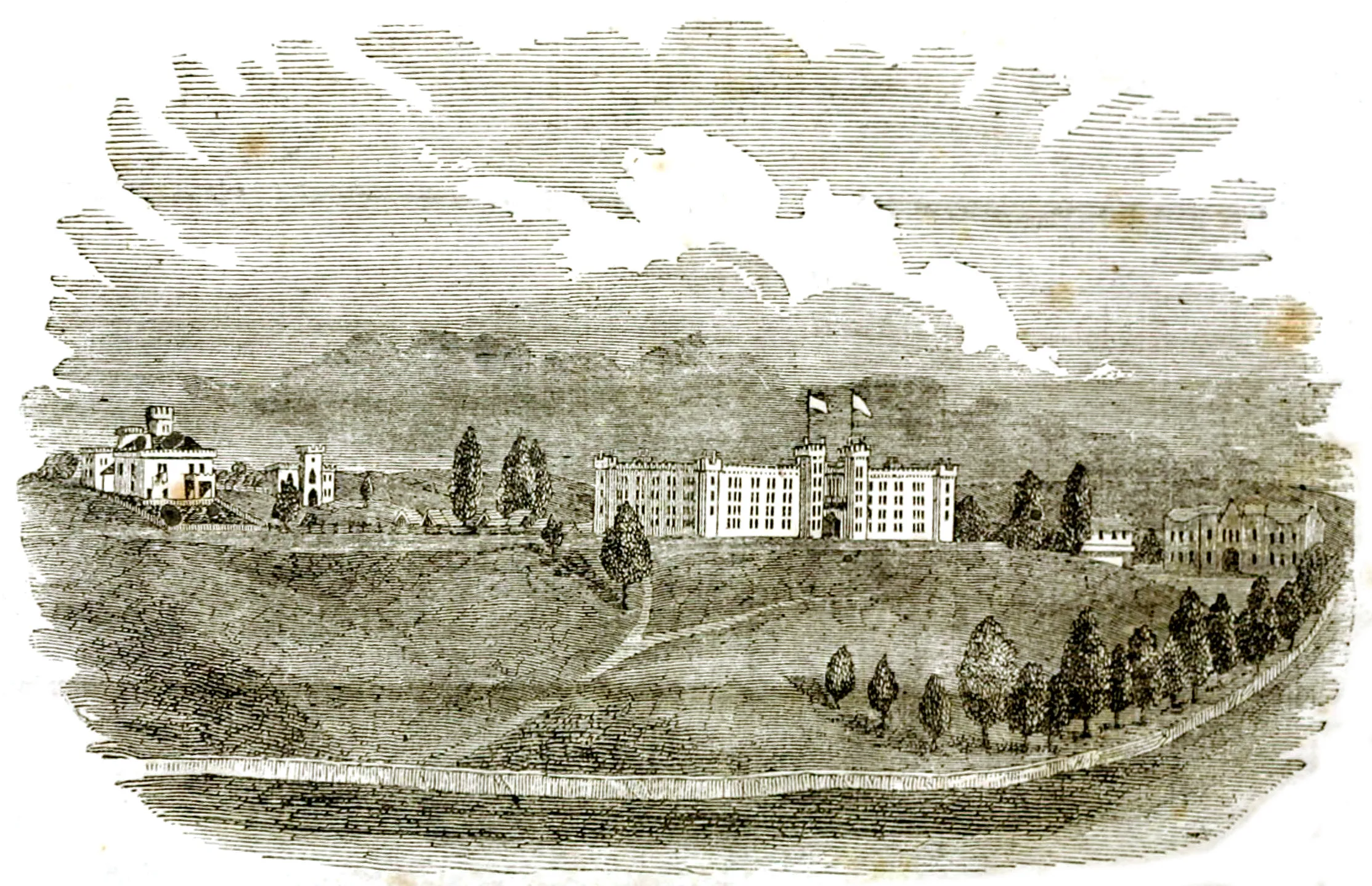
Start with 1921: one unidentified American, chosen in France and carried home, was buried at Arlington on Armistice Day. Harding gave him the Medal of Honor while the country stood silent for two minutes. Worth a longer look is 1620, when storms left the Mayflower in Provincetown Harbor and some passengers argued that no authority bound them. Forty-one of 101 signed a compact in answer. Last, 1839: Private John Strange walked the first cadet sentry post at VMI in falling snow.
— The Patriot Compass desk
1921Featured · This day in history
Harding buries an unnamed soldier at Arlington as the country falls silent for two minutes
Since Memorial Day, one unidentified American had been moving toward this hour: chosen in France and carried across the Atlantic to lie in the Capitol Rotunda. On November 11, 1921, Armistice Day, President Warren G. Harding officiated at the interment of the Unknown Soldier at Arlington National Cemetery. He awarded the Unknown the Medal of Honor, and Americans across the country observed two minutes of silence while the ceremony went on.
The Tomb of the Unknown Soldier gave a country that had lost thousands of men with no names attached a single place to mourn them. It became a permanent national memorial and a central site of American remembrance. Unknowns from World War II and Korea joined the World War I soldier there in 1958.
Did you know
QWhich foreign governments honored the Unknown at Arlington, and what did they bring?
Representatives of other nations presented their countries' highest military decorations to the Unknown, including Great Britain, France, Italy, Romania, Czechoslovakia, and Poland. Each award went to a man with no name, no unit, and no service record that anyone could cite. President Warren G. Harding's Medal of Honor, the American award, was given in the same ceremony. That makes eight of the highest honors available to a soldier, all of them conferred on someone who could not be identified and who, by design, could not be thanked in person. No citation could be read, because there was nothing to cite but the fact of his death in the war.
QDid the Tomb ever lose one of its Unknowns?
It did, in 1998. A Vietnam War Unknown had been added to the Tomb in 1984, joining the unknown service members from World War II and Korea who had been placed there in 1958. In 1998 that Vietnam Unknown was identified and removed. The change was a reversal of the Tomb's original premise: a man chosen because nobody could say who he was turned out, years later, to be someone who could be named. The earlier Unknowns, including the World War I soldier selected by Sgt. Edward F. Younger in 1921, remained as they were. The 1921 soldier was the first, and the Tomb's roster is not a fixed one.
QWhat does the marble Tomb above the Unknown actually look like?
The Unknown was interred beneath a three-level marble tomb. Its bottom two levels are each made of six granite sections, so the lower structure is built in matching tiers. The top level is made of at least nine blocks and has a rectangular opening in its center. The 1921 structure was built from stacked, regular pieces; the sculpted Tomb added in 1931–32 now carries carved figures and an inscription marking the place where a man who left no name was laid to rest on Armistice Day, 1921, as the country stood in silence.
The Daily Record · free by email
Tomorrow's edition in your inbox — one story, one quote, the flag.
1620government
Aboard the Mayflower, 41 passengers bind themselves into a "civil Body Politick"
Storms had forced the Mayflower off its course for Virginia, and by November 1620 it lay at anchor in Provincetown Harbor, inside the hook at the tip of Cape Cod. Some passengers outside the Pilgrim group argued that, since they were not settling in Virginia territory, they were free of any authority. On November 11, 1620 (Old Style), 41 of the ship's 101 passengers signed the Mayflower Compact, covenanting together into a civil body politic under the Crown of England. It joined majority rule to loyalty to King James I.
The Compact is remembered as an early American act of self-government by mutual consent, written by settlers who still professed loyalty to their king. It paired majoritarian rule with allegiance to the Crown, an arrangement that gives the colonial story its first written civic bargain.
Did you know
QWhy does the Mayflower Compact carry two different dates, November 11 and November 21?
The two dates describe the same day under two calendars. The record gives November 11, 1620, in Old Style dating, and the equivalent in New Style is November 21, 1620. A gap of ten days is easy to miss, and it means the anniversary can be marked on either date depending on which calendar a reader uses. The day is the same one. Only the calendar differs. When a modern account says the Compact was signed on November 21, it is not correcting an error, only translating the date into the calendar that is standard today. Anyone checking a primary source should expect the earlier date.
QWhat happened to William Bradford's first wife in Provincetown Harbor?
Dorothy Bradford, the first wife of William Bradford, fell overboard from the Mayflower in Provincetown Harbor on December 17, 1620, and drowned. That was twenty-six days after the Compact was signed, with the ship still at anchor inside the hook of Cape Cod. Her husband was among the figures most closely tied to the colony's early story, so the loss came to the very household at the center of it. The record of the harbor weeks is brief on her, but the only known near-contemporary account gives the date and the manner of her death.
QWho was the first child born to the Pilgrims in New England, and where was he born?
Peregrine White was the first child born to the Pilgrims in New England, and he was born while the Mayflower was still anchored in Provincetown Harbor. That makes his birthplace a ship at anchor, not a house or a settlement. The same vessel that held a signed agreement about governing a colony also held a newborn in a crowded company of 101 passengers. The harbor weeks brought a birth and a drowning to the same ship, within the same winter month of the old calendar.
1982innovation
Columbia lifts off with four aboard, the biggest crew yet, and two commercial satellites in the bay
Four test flights had shown that the Space Shuttle could reach orbit and come home. At 7:19 a.m. EST on November 11, 1982, Columbia left Kennedy Space Center on STS-5, the first operational mission of the program. Four crew members rode aboard, the largest crew any spacecraft had carried, and the payload bay held two Hughes-built satellites, SBS-3 for Satellite Business Systems and Anik-C3 for Telesat Canada. It was also the first shuttle flight on which the crew did not wear pressure suits for launch.
STS-5 was the flight on which the American shuttle stopped being a test vehicle and started taking on customers, among them a Canadian satellite operator. Columbia's four-person crew and commercial cargo presented the program as a working spacecraft that other organizations could use.
Did you know
QHow long did Columbia sit on the ground before it ever flew, and where did those days go?
Columbia spent 610 days in the Orbiter Processing Facility, another 35 days in the Vehicle Assembly Building, and 105 days on Pad 39A before it lifted off on STS-1 on April 12, 1981. That adds up to 750 days of ground work for a vehicle that then reached orbit. The count covers three separate sites at Kennedy Space Center, each with its own stage of preparation: processing the orbiter, stacking it with its launch hardware, and waiting on the pad. By the time of STS-5, Columbia had moved well past that first long wait and was flying its fifth mission.
QWhy did Columbia carry ejection seats borrowed from the SR-71 spy plane?
Columbia flew with ejection seats based on those from the SR-71 Blackbird during its first six flights, and they stayed aboard until 1983. STS-5 falls inside that span, so the seats were still installed in Columbia's cabin on the first operational mission, though they had been deactivated after STS-4. They were one of several features that set Columbia apart from the orbiters built after it, including test instrumentation and black chines. Columbia was also the heaviest of the five orbiters that flew in space. When originally built it weighed about 1,000 kilograms more than Challenger and 3,600 kilograms more than Endeavour.
QWhat do the five points of the blue star on the STS-5 mission patch stand for?
The five points of the blue star on the patch indicate the flight's numerical designation in the Space Transportation System's mission sequence. Each point counts one flight, so the star reads as a five. The patch carries the mission number in its design rather than only in its lettering. STS stands for Space Transportation System, the formal name of the shuttle program, and STS-5 was the fifth entry in that numbered sequence after the four test flights.