Reading 3 of 6 free1776 Club · all 6 storiesSunday, November 1
From the desk
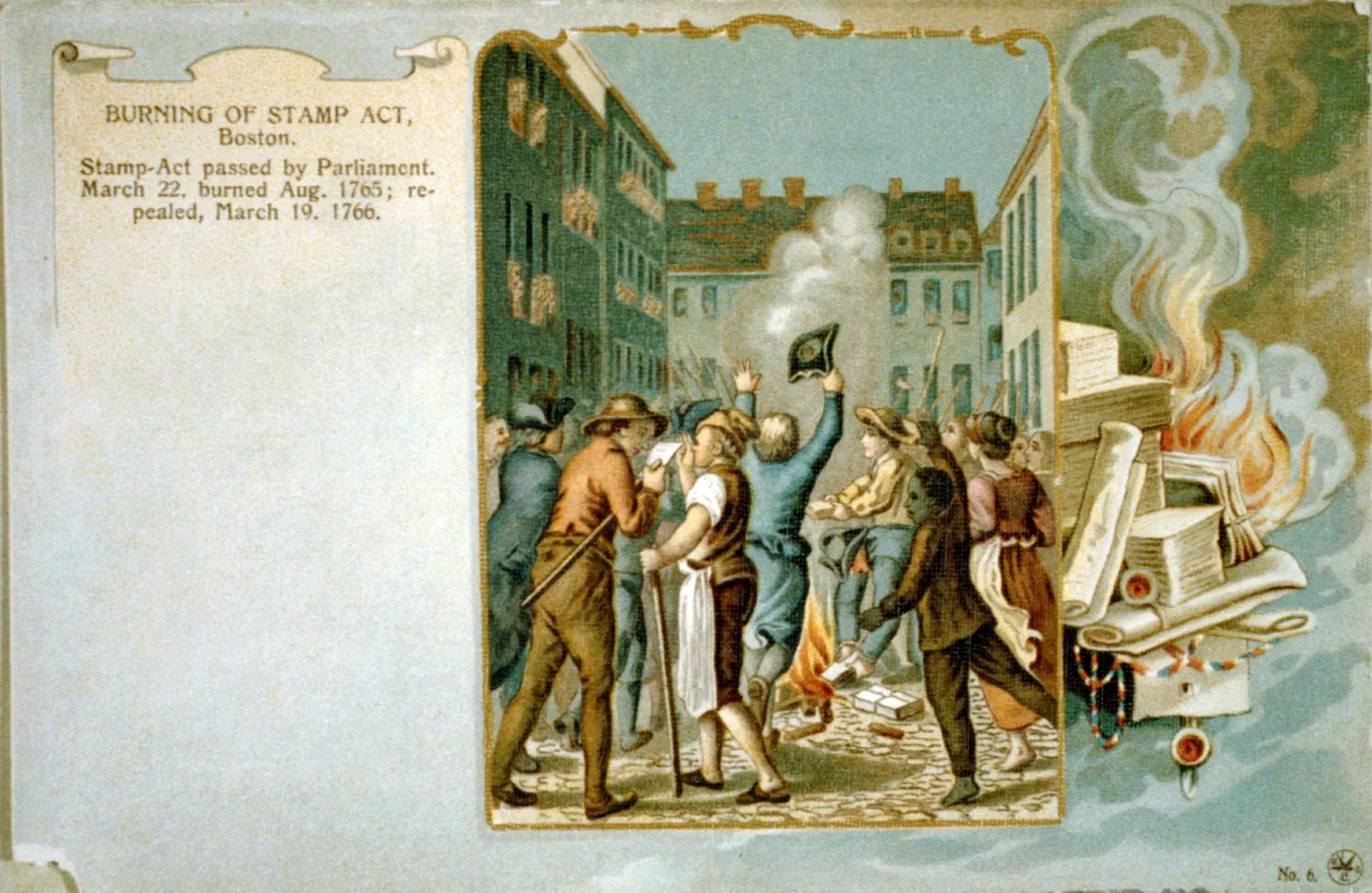
Start with 1952: at 7:15 a.m., Ivy Mike erased Elugelab Island at Enewetak Atoll, leaving a crater 1.9 kilometers wide and 50 meters deep. The device stood over 20 feet tall, weighed 82 short tons and yielded 10.4 megatons. Also worth your time is Ansel Adams in 1941, who pulled over in Hernandez, New Mexico, exposed one negative of a rising moon, and lost the light on the crosses before he could take a second. The Stamp Act took effect in 1765 and lasted less than five months.
— The Patriot Compass desk
1952Featured · This day in history
U.S. detonates Ivy Mike at Enewetak; Elugelab Island is gone
At 7:15 on the morning of November 1, 1952, the United States detonated Ivy Mike on Elugelab Island at Enewetak Atoll, about three years after the Soviet Union's first atomic test (August 1949), and nearly three years after Truman ordered a hydrogen bomb program in January 1950. The device, nicknamed Sausage, stood over 20 feet tall, weighed 82 short tons, and yielded 10.4 megatons of TNT equivalent. Elugelab disappeared, leaving a crater 1.9 kilometers wide and 50 meters deep. It was the first full-yield test of a multi-stage thermonuclear device.
Ivy Mike was the answer to the Soviet bomb of 1949 and the product of a bitter American argument over whether to build it at all. It gave the United States a weapon of megaton scale, and it hung over the 1952 election season, when Oppenheimer's advisers urged delay and the schedule held anyway.
Did you know
QHow did Edward Teller announce the result without breaking secrecy?
Teller was not at Enewetak. He watched the test succeed through a seismometer in Berkeley, California, which registered the shock from the Pacific. He then sent an unclassified telegram to Dr. Elizabeth "Diz" Graves that read, in full, "It's a boy." The message gave nothing away to anyone who happened to read it, yet it told its recipient what had happened in the Marshall Islands. Teller later included the episode in his memoirs. Having helped design the two-stage concept, he was the physicist most closely tied to the weapon, and he marked its success with a birth announcement.
QWhere did most of Ivy Mike's energy actually come from?
Not from fusion. Of the final 10.4-megaton yield, 77 percent came from fast fission of the uranium tamper, the heavy casing around the device, which the fusion reaction drove to split. The deuterium and the plutonium sparkplug rod sat at the center of the design, but the uranium wrapped around them delivered the bulk of the blast. That is part of why the test was so contaminating: fission products fell as radioactive coral debris on ships 56 kilometers from the shot. The weapon called a hydrogen bomb was, by the numbers, mostly a fission event.
QWhat did the official film of the test sound like?
Nothing like the real thing. The film of the detonation was assembled in post-production, with an explosion sound overdubbed onto the images, Wagner-esque music added beneath them, and narration by the actor Reed Hadley. The result turned footage of a vanished island into something closer to a studio feature. Viewers who saw it got a version of the event shaped by a soundtrack, since the detonation at Enewetak had been photographed from a distance and the audio was supplied afterward.
The Daily Record · free by email
Tomorrow's edition in your inbox — one story, one quote, the flag.
1941culture
Without his light meter, Ansel Adams guesses the exposure for a moon rising over Hernandez
On November 1, 1941, Ansel Adams stopped beside a highway in Hernandez, New Mexico, and photographed the moon rising over a village, a church and a graveyard of white crosses. He was on a long Western road trip with his son Michael and his friend Cedric Wright, working on a commission from the Interior Department. Adams exposed a single negative at 4:49 p.m., a time pinned down decades later by astronomical analysis. By the time he reached for a duplicate, the light had moved off the crosses.
Adams made the picture on a federal commission: Interior Secretary Harold Ickes hired him to photograph public lands for mural-sized prints in the department's new museum. The frame that outlasted the assignment showed a New Mexico village, its church and its cemetery, and a mural-sized print later sold at Christie's for $930,000.
Did you know
QWhy are Moonrise prints made before 1970 so scarce?
The negative itself was the problem. Pre-1970 prints are very rare because the original negative is hard to work with, and it resisted easy high-quality printing. Adams eventually remade the negative to heighten its contrast, which made good reprints far more practical. That later negative changed how the image could be reproduced. Early impressions from the original are the ones collectors now treat as scarce. The difficulty traces back to the conditions of the exposure: a single frame, taken in fading light, with the brightness of the moon and the lit crosses held on one sheet of film.
QWhere exactly did Adams set up his camera, and is the spot still there?
Adams worked from the shoulder of the highway at Hernandez, an unincorporated community in northern New Mexico, where US 84 and US 285 run together. The exact position was not on today's road, though. It was alongside the old roadbed, about 50 feet west of the corresponding spot on the modern highway. The village, church and graveyard in the frame sat below him, with snow-covered mountains behind. The road he pulled over on has since been realigned, so the vantage point sits slightly apart from the present pavement.
QHow much did a 1948 Moonrise print gain in value between 1971 and 2006?
One 1948 print sold for $71,500 in 1971, which equals about $568,400 in 2025 dollars. The same print returned to auction in 2006 and sold for $609,600, or about $973,600 in 2025 dollars. Adjusted for inflation, the price rose by roughly $405,000 over those 35 years. Prices have stayed high since. In April 2023, the print once owned by Peter Bunnell sold for $381,000 at a Phillips Photography auction. Bunnell's print brought less than the 2006 sale, a reminder that each impression is priced on its own date and condition.
1944military
A lone Superfortress crosses Tokyo at 32,000 feet, and Japan's fighters cannot reach it
Early on November 1, 1944, Captain Ralph D. Steakley's F-13 Superfortress lifted off from Saipan at 5:55 am and set course for Tokyo, the first Allied aircraft over the region since the Doolittle Raid in April 1942. The skies were free of cloud, and from 32,000 feet the crew passed repeatedly over the aircraft and engine plants west of the city before photographing a similar complex near Nagoya. Japanese fighters and anti-aircraft batteries could not reach it. After 14 hours in the air, the F-13 landed back on Saipan with 7,000 photographs.
The sortie gave the Twentieth Air Force its first usable look at Japan's industrial core from the new Mariana bases, replacing a China-based effort that never had the range. Those photographs became working intelligence for XXI Bomber Command as it planned the bombing of the home islands.
Did you know
QWhat did the crew name the first Superfortress to fly over Tokyo in two and a half years?
By the day after the flight, the crew had named the aircraft "Tokyo Rose," after the propaganda broadcaster. It was a wry choice for a plane that Japan's own air defenses had failed to touch. Steakley received the Distinguished Flying Cross for the mission, and the other members of the crew were decorated later. The film itself moved more slowly than the honors. It took weeks to process all of the photographs and months to analyze them fully, so the pictures that planners studied through the winter were still being worked over long after the crew had been recognized for taking them.
QWhy was the Superfortress barely crawling over Tokyo?
Steakley was surprised to meet strong winds over Japan, and he reported that his ground speed over Tokyo was sometimes only about 70 miles per hour. The cause was the jet stream, which the Army Air Forces did not know about at the time. The American crew had run straight into it at altitude without a name for what they were fighting. The discovery mattered well beyond this one flight: the jet stream over the region greatly complicated XXI Bomber Command's later air raids. A bomber that moved at roughly the speed of a car on a country road over its target was a very different problem from the one planners had drawn on paper.
QHow lucky was the weather on November 1?
Very. November 1 proved to be the only day of the entire air campaign against Japan on which conditions over the home islands were completely clear of cloud. The 3rd PRS's later missions were not so fortunate, and several were frustrated by bad weather. Reconnaissance also carried real risk: one F-13 was lost during a mission to Nagoya on November 21. The squadron had nine aircraft on Saipan by the end of the month. The 7,000 photographs from Steakley's flight were taken on a day that never came again, which helps explain why Hansell valued them so highly.
$17.76 your first year · then $39.99/yr · cancel anytime
Quote of the day
“Nobody will ever deprive the American people of the right to vote except the American people themselves.”
Franklin D. Roosevelt
“The fate of the country does not depend on how you vote at the polls — the worst man is as strong as the best at that game; it does not depend on what kind of paper you drop into the ballot-box once a year, but on what kind of man you drop from your chamber into the street every morning.”
Henry David Thoreau
“Let me now take a more comprehensive view, and warn you in the most solemn manner against the baneful effects of the spirit of party, generally.”