Reading 3 of 6 free1776 Club · all 6 storiesTuesday, October 27
From the desk
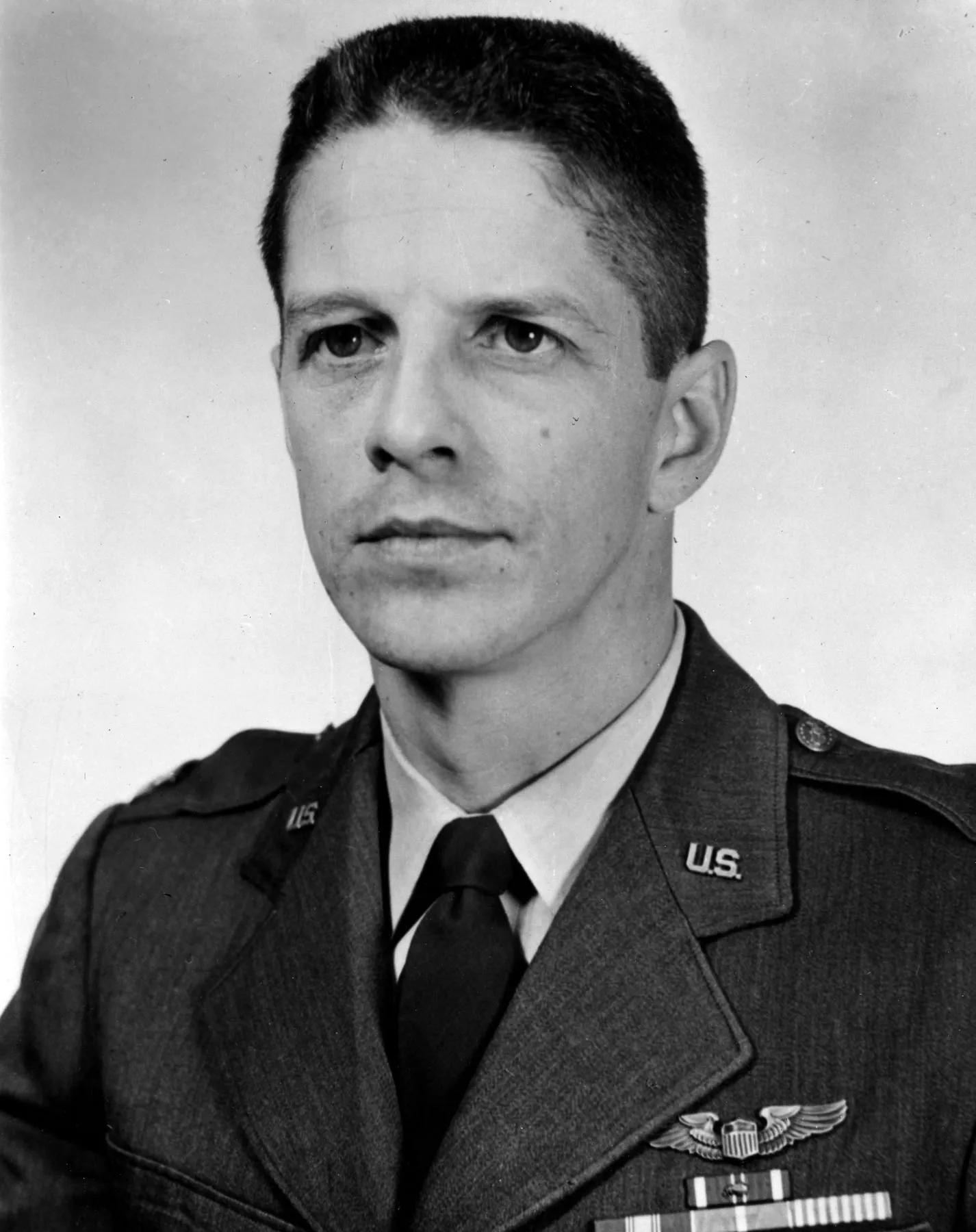
Start with 1962, and start underwater: B-59 had no radio contact with Moscow, dying batteries, dead air conditioning, and a captain convinced war had already started. Launching the nuclear torpedo needed three officers to agree. Vasily Arkhipov said no. That same day, over Cuba, a different answer killed Major Rudolf Anderson when a Soviet missile found his U-2, the only American lost to enemy fire in the whole crisis. Read them together. One man's refusal and another man's death happened hours apart, on the same day, over the same standoff.
— The Patriot Compass desk
1962Featured · This day in history
One officer says no, and a Soviet sub's nuclear torpedo stays in its tube
By October 27, 1962, the Soviet submarine B-59 had been out of radio contact with Moscow for days, its crew unsure if war had already broken out. U.S. destroyers and the carrier Randolph dropped practice depth charges to force the submarine up, while inside, battery power was failing and the air conditioning had died. Captain Valentin Savitsky and political officer Ivan Maslennikov believed they were under attack and wanted to fire the boat's nuclear torpedo. Vasily Arkhipov, whose agreement was required under the launch protocol, refused, and the submarine surfaced instead.
The depth charges American destroyers used to signal B-59 to surface were meant as a routine identification procedure, standard Navy practice during the blockade. Washington had no idea those same charges had convinced a Soviet crew that war had begun. The episode later reshaped how American strategists understood the actual margin for error in nuclear brinkmanship.
Did you know
QWhat deadly accident had Arkhipov already survived a year before the B-59 standoff?
In July 1961, Arkhipov served as executive officer aboard the Hotel-class submarine K-19 when its reactor coolant system failed southeast of Greenland. With no backup systems and radio contact down, Captain Nikolai Zateyev had seven engineers improvise a makeshift cooling system to avert a meltdown. It worked, but all seven engineers and their divisional officer died of acute radiation syndrome within a month, and 15 more crew members died from radiation aftereffects within two years. Arkhipov himself was exposed. Some researchers later linked that radiation to the kidney cancer that killed him in 1998. His reputation from surviving K-19 is part of why his objections carried weight aboard B-59 a year later.
The Daily Record · free by email
Tomorrow's edition in your inbox — one story, one quote, the flag.
1682government
William Penn steps ashore at Philadelphia, a city that exists only on paper
A year earlier, Charles II had handed William Penn a charter to a colony Penn had never seen, to settle a debt the crown owed his late father. On October 27, 1682, Penn arrived at the riverfront spot that would later bear his name, Penn's Landing, and walked onto the site of the city he had already christened Philadelphia. He had bought the land from the Lenape rather than simply claim it, a choice that set the colony's tone for decades. The grid he carried in his head did not yet exist; the city would have to be built around him.
Philadelphia's founding gave colonial America its first large experiment in religious toleration and planned urban design, and the city it became hosted the Continental Congress and the Constitutional Convention, and saw the Declaration of Independence signed within its walls. The grid plan Penn brought ashore in 1682 became the template American cities from Savannah to Salt Lake City would copy for the next two centuries.
Did you know
QWhy does Philadelphia's name come from an Ancient Greek word rather than an English one?
Penn built the name from two Greek roots: phílos, meaning beloved or dear, and adelphós, meaning brother or brotherly, combining them into a word for brotherly love. He had no Greek city in mind as a model; he reached for classical language because English offered nothing that carried the same religious weight for a Quaker colony. The choice set Philadelphia apart from nearly every other English colonial settlement of the era, which tended toward royal names, saints, or English hometowns. Boston, Jamestown, and New York all honored people or places back home. Penn instead named his city after an idea, hoping the word itself would remind every resident what the place was supposed to be for.
QWhat debt did Charles II actually owe that led him to hand over an entire colony?
The charter Penn received in 1681 settled a debt the crown owed his late father, Admiral Sir William Penn, not a favor earned by the younger Penn himself. The elder Penn had lent the crown money and provided naval service, and Charles II cleared the account by granting his son roughly 45,000 square miles of American territory instead of repaying in cash. Land grants were how a cash-strapped Stuart monarchy routinely paid debts it could not cover in coin. Penn turned an inherited financial claim into a religious experiment, which was not the outcome Charles II was purchasing when he signed the paperwork.
QWhere exactly did the Lenape treaty take place, and what happened to that ground afterward?
The friendship treaty with chief Tammany was sealed under a single elm tree at Shackamaxon, a Lenape village site that today sits inside Philadelphia's Fishtown neighborhood. No treaty document or transcript from that meeting survives, so historians rely on later accounts and tradition to describe what was said. The tree itself became a landmark referenced by Philadelphians for generations after the city grew up around the spot. Tammany's name later traveled far beyond Shackamaxon, attached decades afterward to political organizations that invoked him as a symbol of early American goodwill, even though the man who once stood under that elm had nothing to do with those later institutions.
1904innovation
A train leaves City Hall underground, and New York gets its subway
For a decade, New York had talked about building underground while its streets choked on horse carts and elevated trains. On the afternoon of October 27, 1904, Mayor George B. McClellan Jr. drove the first ceremonial train out of City Hall Station, and by evening the Interborough Rapid Transit Company opened the line to the public for a five-cent fare. The route ran 9.1 miles through 28 stations, north under Lafayette Street and Park Avenue to Grand Central, west to Times Square, then up Broadway to 145th Street. New Yorkers rode it in such numbers that within a decade 1.2 million people a day were riding the subway.
The IRT proved an American city could build underground at scale and make it pay its own fare, a model Boston and Philadelphia had only partly tested. Its success pulled Manhattan's Theater District uptown and pushed residential growth into the outer boroughs, and American cities began growing around transit lines instead of horse traffic for decades afterward.
Did you know
QWho actually put up the money to build the tunnels, if the city wouldn't risk going it alone?
The construction contract went to the Rapid Transit Construction Company, organized by John B. McDonald, but the financing behind it came from August Belmont Jr., a financier whose family name was already attached to horse racing and banking in New York. Belmont's capital let McDonald's company take on the actual digging starting in 1900, while the city held the legal structure through its new Board of Rapid Transit Railroad Commissioners, a body that by law included the sitting Mayor of New York City. The arrangement meant a private fortune built public infrastructure that the city itself would own and lease back out, a split McClellan's own board had engineered a decade earlier under the 1894 Rapid Transit Act.
QWhy did the subway route take such an awkward jog at 42nd Street instead of running straight up Broadway?
The Rapid Transit Commission itself admitted the problem in writing, calling the resulting path "the awkward alignment...along Forty-Second Street" in its own records. The detour existed because property owners and merchants south of 34th Street objected to tunneling under Broadway there, forcing Parsons's engineers to route the line east under Park Avenue instead, then cut west at 42nd Street to reach Times Square before turning north again up Broadway proper. The jog added distance and complexity to a line that otherwise ran in straight corridors, a compromise baked into the system before a single car ever ran on it. Commissioners accepted the detour as the price of building at all.
QHow much of the original line was built with four tracks instead of two, and why did that matter?
Between Brooklyn Bridge–City Hall and 96th Street, the original IRT ran four tracks side by side rather than the standard two, a design choice that let the system run express trains alongside local ones from its very first day of service. Riders heading further uptown could skip stops entirely by catching an express, a feature that let the subway outpace the elevated trains and horse cars it was built to relieve. That four-track stretch set the template for express service across the rest of the system as it expanded under the 1913 Dual Contracts, long after this original segment had become just one piece of a much larger network.
$17.76 your first year · then $39.99/yr · cancel anytime
Quote of the day
“Nobody will ever deprive the American people of the right to vote except the American people themselves.”
Franklin D. Roosevelt
“The fate of the country does not depend on how you vote at the polls — the worst man is as strong as the best at that game; it does not depend on what kind of paper you drop into the ballot-box once a year, but on what kind of man you drop from your chamber into the street every morning.”
Henry David Thoreau
“Let me now take a more comprehensive view, and warn you in the most solemn manner against the baneful effects of the spirit of party, generally.”