Reading 3 of 6 free1776 Club · all 6 storiesFriday, October 23
From the desk
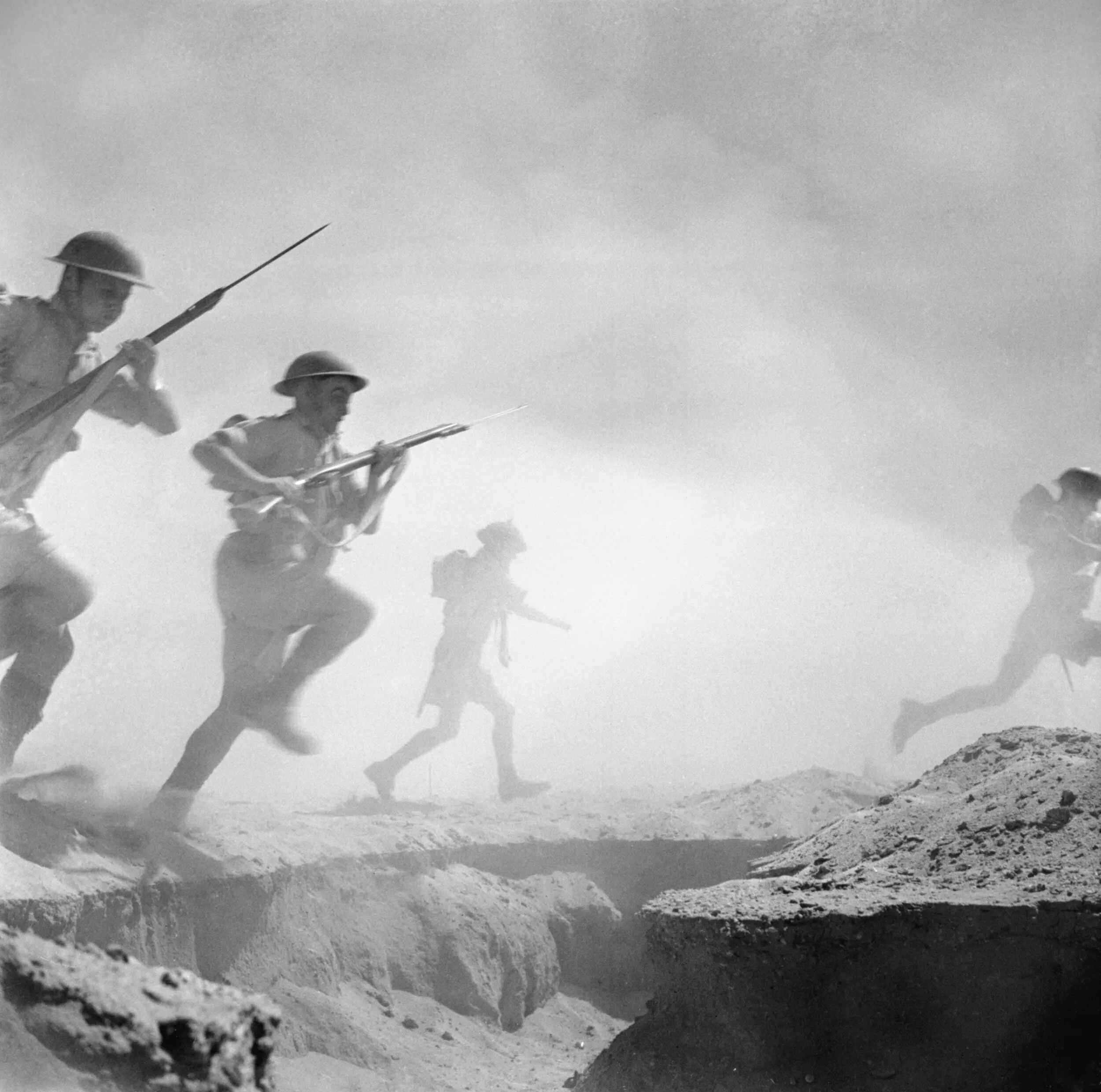
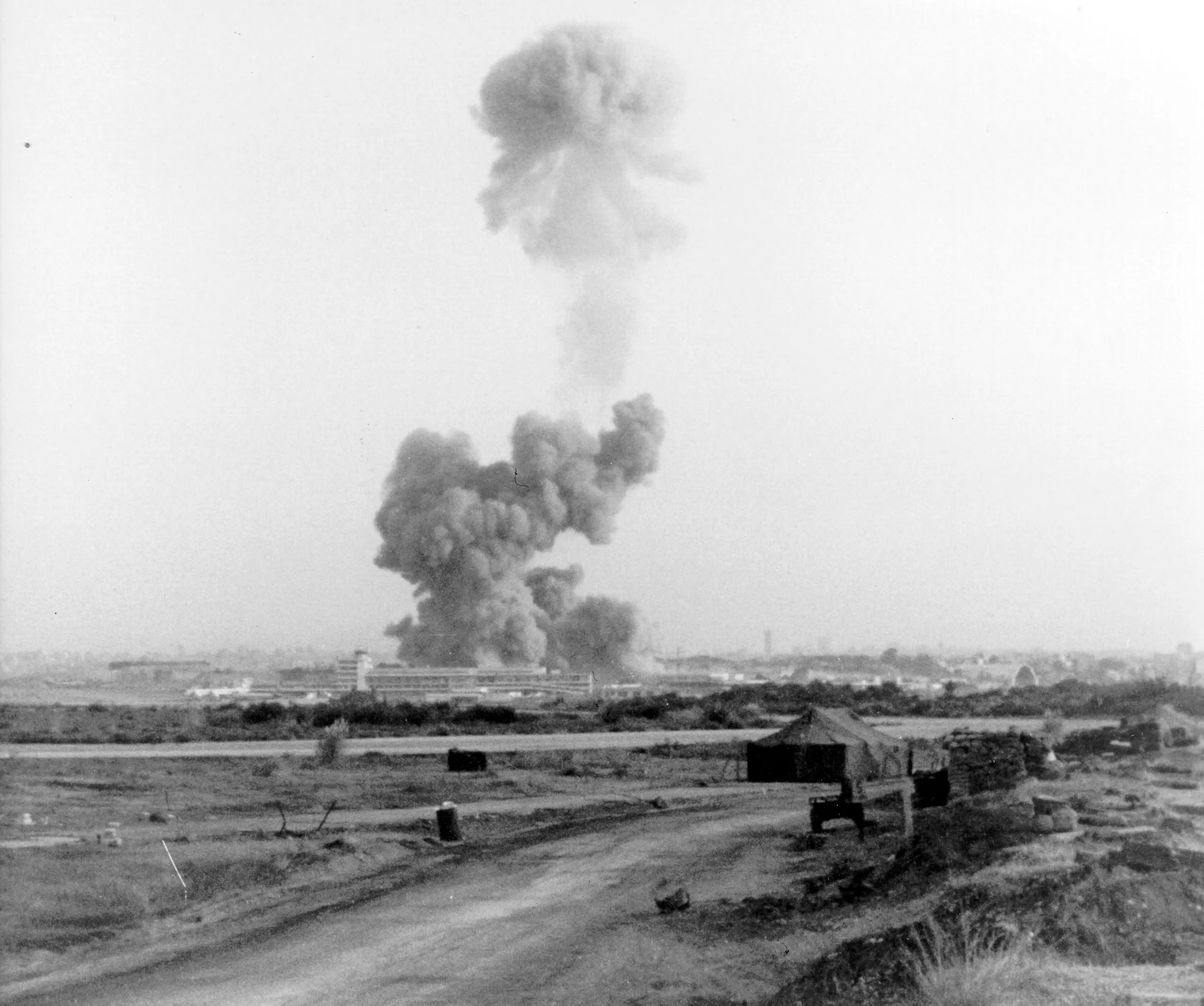
Start with 1944: two American submarines, Darter and Dace, caught Kurita's Center Force on radar at 1:16 a.m. off Palawan and opened the largest naval battle of the war before dawn, sinking two heavy cruisers and sending the Japanese admiral swimming from his own flagship. Worth a longer look: 1983, when a single truck bomb collapsed the Marine barracks in Beirut and killed 241 men in their sleep, a second blast minutes later killing 58 French paratroopers nearby. El Alamein's opening barrage that same date in 1942 is worth a glance too, four divisions stalled by their own dust.
— The Patriot Compass desk
1944Featured · This day in history
Two US submarines catch Kurita's fleet at midnight; three heavy cruisers torpedoed by dawn
Before dawn on October 23, 1944, the Japanese Navy's Center Force slipped past Palawan Island on its way to Leyte Gulf, where it aimed to smash the American invasion fleet supporting MacArthur's return to the Philippines. The American submarines Darter and Dace picked up the formation on radar at 1:16 a.m. and struck at first light, torpedoing the heavy cruisers Atago, Takao, and Maya. Atago and Maya sank quickly, and Vice Admiral Takeo Kurita, the Japanese commander, had to swim away from his own sinking flagship. Two American submarines had struck the first blow of the largest naval battle of the war.
Two diesel submarines, acting on their own initiative in a passage no one expected them to be patrolling, opened the decisive naval battle of the Pacific war before the main fleets ever met. The strike crippled Kurita's command structure at the outset and forced him to shift his flag mid-battle, a disruption that American commanders would exploit for the next three days.
Did you know
QWhat finally destroyed the grounded submarine Darter after scuttling attempts failed?
Torpedoes from the submarines Dace and Rock missed Darter entirely and hit the reef instead, so the job fell to deck guns. The submarine Nautilus arrived and pounded Darter with repeated hits from her 6-inch deck guns, and on 31 October her commander concluded the wreck was only fit for scrap and sailed off. The Japanese never bothered salvaging it either, leaving Darter's wreck on Bombay Shoal, which the Japanese also left untouched. Darter sat there, unsalvaged and unfinished, until the war ended.
QHow did Darter's contact report reach the Japanese without them acting on it?
A radio operator aboard the battleship Yamato actually intercepted at least one of Darter's three contact reports as she radioed Kurita's position into the night. Despite that warning sitting in Japanese hands hours before the attack, Kurita failed to order any additional antisubmarine precautions for his formation. The Center Force kept steaming through Palawan Passage at a steady pace, giving Darter and Dace time to race ahead on the surface and set up a submerged ambush at first light. Kurita simply never acted on the warning sitting in his own fleet's hands.
QWhat became of the crippled cruisers Takao and Myōkō after they survived the submarine attack?
Takao limped back to Brunei under escort, but by January 1945 she had moved on to Singapore, where she was joined by the heavy cruiser Myōkō, damaged separately during the Sibuyan Sea fighting. Japanese commanders judged both ships beyond repair and never returned them to active duty. Instead the two cruisers sat moored in Singapore harbor for the remainder of the war, stripped of their offensive role and used only as floating anti-aircraft batteries to defend the port from air raids. Takao and Myōkō spent the rest of the war moored in Singapore harbor as anti-aircraft batteries.
The Daily Record · free by email
Tomorrow's edition in your inbox — one story, one quote, the flag.
2001innovation
Apple shows a white box the size of a deck of cards: 1,000 songs in your pocket
By the fall of 2001, Apple had spent four years clawing back from the brink under a returning Steve Jobs, rebuilding around the iMac and a leaner product line. On October 23, Jobs stood in Cupertino, California, and held up a device weighing 6.5 ounces, calling it simply "1,000 songs in your pocket." The iPod packed a 5 GB hard drive into a case smaller than a deck of cards, aimed at a market of MP3 players that held far fewer songs.
The iPod anchored Apple's turnaround inside the United States at a moment when American consumer electronics manufacturing had largely ceded ground to Japanese firms. Its success funded the iPhone and iPad that followed, products that shifted the center of gravity for personal technology from Tokyo and Seoul to Cupertino.
Did you know
QWhy does the iPod's name reference a 1968 science fiction film?
Freelance copywriter Vinnie Chieco came up with "iPod" after touring Apple's prototype and thinking of the line "Open the pod bay doors, Hal" from 2001: A Space Odyssey. The white device, with its blank face and single dock connector, struck him as resembling a pod separated from a larger ship, much like the small space pods in Stanley Kubrick's film. Apple had been using the internal code name P-68 during development. Chieco's pitch beat out other candidates under consideration at the time. The name stuck for every iPod generation that followed.
QWhich household gadgets actually shaped the iPod's look and scroll wheel?
The iPod's case drew directly from the 1958 Braun T3 transistor radio, a design by Dieter Rams known for its plain rectangular face and minimal controls. The scroll wheel interface borrowed from an unlikely source: Bang & Olufsen's BeoCom 6000 telephone, which used a rotating dial for navigating functions. Apple's hardware team folded both references into a single object, trading the original button-heavy layout for the wheel that became the iPod's signature. Pixo, an outside firm, was brought in to implement the interface, Unicode text handling, memory management, and event processing, with Apple closely overseeing the integration.
QWhat game was hidden inside the very first iPod as a secret feature?
Engineers tucked a playable version of Brick into the original iPod's firmware as an undocumented easter egg, accessible only if a user knew the hidden button sequence. Apple later made it an official menu option in a subsequent firmware update, and following iPod models expanded the hidden-game roster with Parachute, Solitaire, and Music Quiz. The device's media ambitions went beyond music and games too: later iPod Photo models could display JPEG, BMP, GIF, TIFF, and PNG image files on their screens, and the broader iPod line supported MP3, AAC/M4A, Protected AAC, AIFF, WAV, Audible audiobook, and Apple Lossless formats, well beyond the plain MP3 player label most buyers gave it.
2007exploration
Discovery lifts off with Pamela Melroy in command, only the second woman to lead a shuttle crew
A piece of ice sat on the hydrogen umbilical in the final minutes of the countdown, four inches by half an inch, small enough that engineers cleared it for flight. At 11:38 a.m. EDT on October 23, 2007, Space Shuttle Discovery launched from Launch Complex 39A at Kennedy Space Center on mission STS-120, its 34th flight. Commander Pamela Melroy, the second woman ever to lead a shuttle crew, flew with pilot George Zamka and mission specialists Scott Parazynski, Douglas Wheelock, Stephanie Wilson, and Paolo Nespoli of the European Space Agency. Discovery was headed for the International Space Station to deliver the Harmony module, the connecting node that would enable future installation of the European Columbus and Japanese Kibō laboratory modules.
NASA had planned this flight for early 2004, but the Columbia disaster grounded the shuttle fleet for more than three years before Discovery was cleared to fly. Melroy's command, following Eileen Collins by seven years, marked only the second time American spaceflight had put a woman in that top seat. The mission's Harmony module also became the literal joint point enabling the later addition of the European Columbus and Japanese Kibō laboratory modules to the station's U.S. segment.
Did you know
QWhat happened to the lightsaber after it got back to Earth?
Chewbacca himself handed it off. On August 28, 2007, the Star Wars character presented the prop lightsaber to NASA officials from Space Center Houston during a ceremony at Oakland International Airport, ahead of its launch aboard Discovery. After flying aboard Discovery for the length of STS-120 in honor of the franchise's 30th anniversary, the prop came back to Houston, where it was greeted by costumed Stormtroopers. It now sits on permanent display at Space Center Houston. The whole arrangement was a joint publicity effort between NASA and Lucasfilm, timed deliberately to the anniversary rather than any scientific purpose, a rare bit of pageantry folded into a station-assembly flight otherwise consumed by solar array repairs and truss relocations.
QWho took over Daniel Tani's old job aboard the station once he swapped places with Clayton Anderson?
The swap happened through a custom-fitted Soyuz seat liner. After docking, Tani's molded seat liner was transferred out of Discovery and installed in Soyuz TMA-11, while Clayton Anderson's liner was moved the opposite direction into the shuttle. That liner swap, not a verbal handover, officially ended Anderson's increment and began Tani's, since the liner determines who has a return seat on the station's lifeboat. The paperwork moment came the same day as docking, October 25, 2007, hours before the crews even settled into joint operations. It is an overlooked detail of how ISS crew rotations actually worked: whoever's seat liner sat in the Soyuz was, administratively, the one living on station.
QWhy did engineers care about a 4-inch chunk of ice during STS-120's countdown besides its size?
The ice sat on a spot engineers had already modeled. The fragment, 4 inches by half an inch, clung to a Kapton purge barrier near the liquid hydrogen umbilical pyrotechnic canister closeout, a spot nicknamed the 'baggie.' Prior testing had shown ice on that specific liner typically shakes loose at main engine ignition rather than lingering into the dangerous high-velocity phase of ascent. Had the same ice instead formed on nearby metal surfaces around the liner, engineers judged it could have stayed attached longer and broken free at a more critical moment. That distinction, not just measurement, is what let NASA clear the countdown instead of scrubbing it.
$17.76 your first year · then $39.99/yr · cancel anytime
Quote of the day
“Nobody will ever deprive the American people of the right to vote except the American people themselves.”
Franklin D. Roosevelt
“The fate of the country does not depend on how you vote at the polls — the worst man is as strong as the best at that game; it does not depend on what kind of paper you drop into the ballot-box once a year, but on what kind of man you drop from your chamber into the street every morning.”
Henry David Thoreau
“Let me now take a more comprehensive view, and warn you in the most solemn manner against the baneful effects of the spirit of party, generally.”