Reading 3 of 6 free1776 Club · all 6 storiesMonday, October 19
From the desk
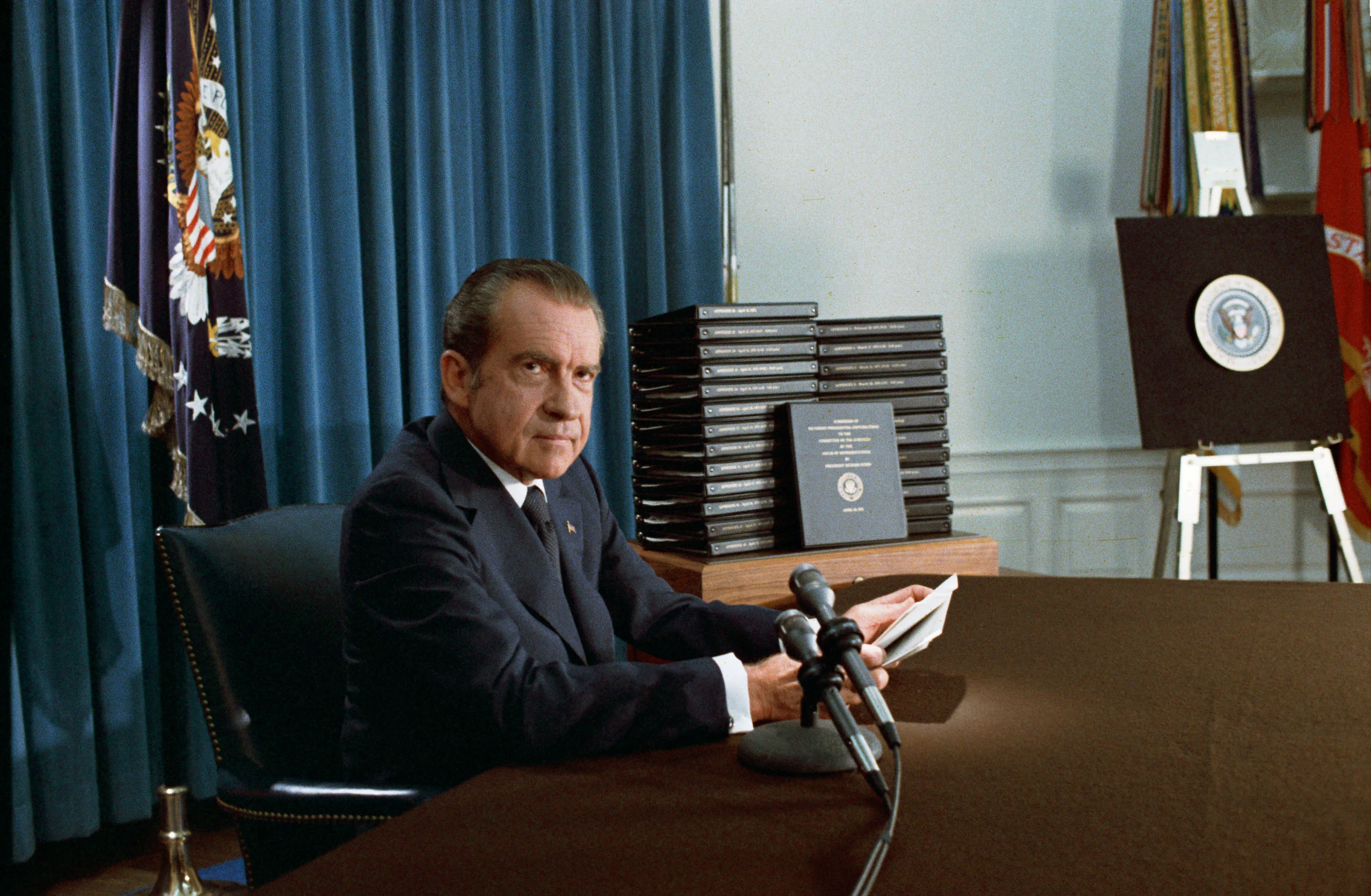
Start with Yorktown, 1781. Cornwallis claimed illness and sent a deputy to hand over his sword rather than face Washington himself, and Washington answered the insult by having his own deputy, Benjamin Lincoln, accept it. Eight thousand British and German troops stacked their arms that day. Also worth your time: 1973, when Nixon dodged a court order for the Watergate tapes by offering up Senator Stennis, deaf and 72, to listen for him and write a summary. And 1950 in Pyongyang, where UN troops celebrated a captured capital hours before Chinese soldiers began crossing the border unseen.
— The Patriot Compass desk
1781Featured · This day in history
Cornwallis surrenders at Yorktown; he sends a stand-in rather than face Washington
For three weeks, Continental and French guns had pounded a British army trapped on a Virginia peninsula with no way out by sea. On October 19, 1781, Lord Cornwallis surrendered his force at Yorktown, ending the siege that began September 28. Claiming illness, Cornwallis stayed in his quarters and sent Brigadier General Charles O'Hara to hand over his sword; Washington had his own deputy, Benjamin Lincoln, accept it instead. Roughly 8,000 British and German troops marched out and stacked their weapons.
Yorktown was the battlefield proof Americans had been fighting seven years for: a British field army, surrendered whole, on American soil, to an American commander. It did not end the war on paper, but it ended British will to fight one, and it made Washington the indispensable man of the new nation's founding memory.
Did you know
QWhat did O'Hara get wrong before he ever reached Benjamin Lincoln?
Charles O'Hara first walked his sword toward General William Heath, mistaking him for the officer meant to accept Cornwallis's surrender. Heath was an American general present at the ceremony but not Washington's designated second. Only after that misstep was O'Hara redirected to Benjamin Lincoln, the man Washington had actually assigned to receive the sword. O'Hara was shuffled between officers before the exchange was finally completed in front of the assembled armies.
QHow many ships did Cornwallis hand over along with his army?
Fourteen ships of the line went down with the surrender, alongside the roughly 8,000 troops who stacked their muskets. Cornwallis had marched to Yorktown specifically to secure a port for the Royal Navy, so losing fourteen warships alongside the army was a heavy blow on top of the surrender itself. The vast stores of supplies and equipment surrendered alongside them meant Britain lost men, ships, and materiel in one stroke.
QWhere did the surrender ceremony actually take place?
The formal exchange happened in the yard outside the Moore House, a private residence just beyond the Yorktown lines rather than inside any military fort or headquarters. The house had already served as the site where terms of surrender were negotiated in the days before the ceremony itself. Choosing a civilian homestead's yard for the handover of an army of thousands gave the moment an oddly domestic backdrop: soldiers and generals gathered on someone's lawn to formally end the fighting, rather than in any purpose-built setting.
The Daily Record · free by email
Tomorrow's edition in your inbox — one story, one quote, the flag.
1950military
Pyongyang falls to UN troops; by nightfall, China's army is already crossing the border
North Korea's army had fewer than 8,000 effective troops left to defend its own capital. On October 19, 1950, the ROKA 1st Division and US 1st Cavalry Division converged on Pyongyang, approaching from the southeast and south respectively, overcoming North Korean resistance at river crossings and mined roads. General Paik Sun-yup, a Pyongyang native, led his troops to a ford he remembered from childhood, and by dark most of the city north of the Taedong River was in UN hands. Within hours, Chinese soldiers began slipping across the Korean border, unknown to the troops celebrating in the city.
The US 1st Cavalry Division's race into Pyongyang, and Task Force Indianhead's recovery of 20 American prisoners who escaped or were rescued during the capture of Pyongyang, marked the peak of America's post-Inchon confidence that the war was nearly won. That confidence collapsed within weeks once Chinese troops, already crossing the border that same night, would soon push UN forces into a long retreat, turning what looked like victory into a stalemate that lasted years.
Did you know
QWhy did Colonel Dean Rusk push to include Pyongyang in the American zone before the war even started?
When US officials drew the 38th parallel as Korea's dividing line in 1945, Colonel Dean Rusk argued for pushing American responsibility as far north as the capital, even though he admitted it was "further north than could be realistically reached by US forces in the event of Soviet disagreement." Rusk later explained the reasoning bluntly: "we felt it important to include the capital of Korea in the area of responsibility of American troops." Pyongyang's fall in October 1950 meant UN troops had reached the line Rusk drew five years earlier, before any shots had been fired in the war itself.
QWho commanded the two cavalry units that never even made it into the final assault's main narrative?
Behind the officers who led troops into Pyongyang's streets sat a layered chain of command rarely mentioned afterward. Colonel Marcel Crombez commanded the 5th Cavalry Regiment, with Lieutenant Colonel Paul Clifford running its 2nd Battalion, while General Hobart Gay oversaw the entire 1st Cavalry Division and Colonel James Woolnough held another command post within it. These men coordinated logistics, armor support, and troop movements across multiple battalions converging on the capital, work that rarely appears in accounts of the battle itself.
QHow long did the UN actually hold Pyongyang after capturing it?
UN forces controlled Pyongyang for less than seven weeks. UN forces captured Pyongyang on October 19, 1950, with the city fully secured by October 20, but Chinese intervention reversed the gains so completely that North Korean troops retook the capital by December 5, barely 46 days later. That reversal turned what UN commanders treated as a war-ending victory into an occupation of less than seven weeks.
1948government
Truman stands on Union Square to honor three presidents North Carolina gave the nation
North Carolina had spent five years working toward a monument to its three native-born presidents. On October 19, 1948, President Harry Truman stood before the State Capitol in Raleigh to deliver the main address as the monument was unveiled by distant relatives of Andrew Jackson, Andrew Johnson, and James K. Polk. Governor R. Gregg Cherry accepted it on the state's behalf, and the 82nd Airborne Division Band closed the ceremony with "The Stars and Stripes Forever." It was the first memorial to any of the three men ever erected in their home state.
State Capitol, Raleigh, North CarolinaStory page →
The American Throughline
Three presidents born in the same state, none honored there until 1948, reflects how slowly the South built monuments to its own leaders after the Civil War. Truman's appearance, weeks before a presidential election he was expected to lose, turned a state monument dedication into a moment of national politics.
Did you know
QWho actually unveiled the monument when the ceremony reached its climax?
Three people with a direct bloodline to the men being honored pulled the cords: distant relatives of Andrew Jackson, Andrew Johnson, and James K. Polk, one for each president. Willis Smith, chairman of the monument committee, presided over the ceremony and handed the moment to them rather than to Truman or Governor Cherry. The symbolism was deliberate: family, rather than the state or federal government, unveiled the monument to three men who had left North Carolina to make their names elsewhere. Afterward Cherry formally accepted the monument on behalf of the state. The relatives themselves are not named in the record, only identified by their descent from the three presidents.
QWhat else sat on the Capitol grounds near the new presidential monument?
Two old mortars once mounted at Fort Macon, the coastal fortification on North Carolina's Outer Banks, were placed near the monument. They had no connection to Jackson, Johnson, or Polk, but their presence sat alongside the new bronze tribute as a second, older piece of state military history. Fort Macon itself dated back to the antebellum coastal defense system and saw use during the Civil War. The mortars gave visitors a second, older artifact to look at while touring the grounds, a quiet counterpoint to the freshly cast bronze figures dedicated that October day.
QWho delivered the invocation that opened the dedication ceremony?
Broadus E. Jones, pastor of Raleigh's First Baptist Church, gave the invocation before the main addresses began. His prayer set a religious tone ahead of the political speeches from Truman, Willis Smith, and the other officials on the program. Tennessee Governor Jim Nance McCord, there as a guest of honor because of Andrew Johnson's Tennessee ties, was also invited to give a brief speech during the proceedings. A local Baptist minister, not a national figure, was chosen to open the ceremony before a sitting president took the podium.
$17.76 your first year · then $39.99/yr · cancel anytime
Quote of the day
“Nobody will ever deprive the American people of the right to vote except the American people themselves.”
Franklin D. Roosevelt
“The fate of the country does not depend on how you vote at the polls — the worst man is as strong as the best at that game; it does not depend on what kind of paper you drop into the ballot-box once a year, but on what kind of man you drop from your chamber into the street every morning.”
Henry David Thoreau
“Let me now take a more comprehensive view, and warn you in the most solemn manner against the baneful effects of the spirit of party, generally.”