Reading 3 of 8 free1776 Club · all 8 storiesThursday, October 15
From the desk
Start with 1954: Hurricane Hazel made landfall at Calabash, North Carolina as a Category 4, then ran north and slammed into Toronto that same night still carrying hurricane winds. The Humber River took out Raymore Drive, killing 35 there alone, 176 dead across two countries in a single day. Worth a longer look: 1997, when a Titan IVB left Cape Canaveral before dawn carrying Cassini and Huygens on a seven-year route to Saturn. Smaller but sharp: 1781's Raft Swamp, North Carolina's last Revolutionary War battle, fought in a swamp nobody wanted to enter.
— The Patriot Compass desk
1954Featured · This day in history
Hazel comes ashore in the Carolinas; by nightfall it is drowning Toronto
By mid-October 1954, Hurricane Hazel had already killed hundreds in Haiti and was bearing down on the Carolina coast. On October 15, it came ashore near Calabash, North Carolina, as a Category 4 storm, then raced north through the United States before colliding with Toronto that same night as an extratropical system that still carried hurricane winds. The Humber River tore through the Raymore Drive neighborhood, sweeping away homes and killing 35 people. By the time Hazel finally wore itself out, it had killed 95 Americans and 81 Canadians in a single day's path.
Hazel's 95 American deaths and total damage across the United States ranging from $281 million to $308 million pushed federal and state agencies toward tighter hurricane forecasting and coastal building codes in the years after. The storm's name was retired from the Atlantic naming list, one of the first Atlantic hurricane names ever retired because of its death toll.
Did you know
QHow many people did Hurricane Hazel kill in Haiti before it ever reached North America?
No exact Haiti death toll survives, but Hazel struck the island on October 12 as a Category 3 hurricane, leaving widespread destruction and significant loss of life days before its Carolina landfall. That earlier landfall, over mountainous terrain already prone to flooding, showed Hazel's destructive potential days before it reached the Carolinas. The storm's Caribbean toll is often overshadowed by what came later in Toronto and North Carolina, but it was the first place Hazel proved lethal.
QWhere exactly did Etobicoke Creek's floodwaters carry the homes it tore loose?
Etobicoke Creek overflowed and swept dwellings directly into Lake Ontario, killing seven people in the process. Unlike the Humber River's destruction along Raymore Drive, which claimed 35 lives inland, the Etobicoke Creek deaths involved houses carried all the way to the lake itself. Etobicoke Creek's smaller death toll compared to the Humber reflects how differently floodwaters hit different parts of Toronto that night.
QWhat specific dollar gap exists between Hazel's U.S. and Canadian damage totals?
Hazel caused between $281 million and $308 million in damage in the United States but more than C$135 million in Canada, a figure that converts to roughly C$1.6 billion in 2025 terms. The Canadian total, concentrated almost entirely in and around Toronto, came from the storm stalling over the city on the night of October 16, rather than the broader coastal destruction spread across the Carolinas. The Canadian damage total, concentrated in one city over one night, approached the scale of the broader coastal destruction in the Carolinas.
The Daily Record · free by email
Tomorrow's edition in your inbox — one story, one quote, the flag.
1781military
Graham's riders break the Tory line at Raft Swamp; darkness ends North Carolina's last battle
Raft Swamp had long sheltered North Carolina's Loyalists, a tangle of water and timber near Red Springs that Patriot militia rarely entered. On October 15, 1781, Maj. Joseph Graham led the cavalry vanguard of Gen. Griffith Rutherford's expedition against Wilmington into that refuge, where Col. Hector "One-Eyed Hector" McNeill's mounted Loyalists waited along Rockfish Creek. Graham's horsemen broke the Loyalist cavalry, then fought twice more at narrow causeways as the lines dissolved into confusion. Darkness ended it with the Tories scattered and the Patriots holding the ground. It was the last battle fought in North Carolina during the Revolution.
Raft Swamp, near Red Springs, North CarolinaStory page →
Raft Swamp broke the last large organized Loyalist force in North Carolina, four days before Cornwallis surrendered at Yorktown. The marker at the site still frames it as the answer to the Loyalists' earlier win at McPhaul's Mill, a local score settled just before the national war itself ended.
Did you know
QWhat does the state historic marker at Raft Swamp actually say happened there?
The marker frames the battle as a direct answer to an earlier Loyalist victory nearby: "After the Tory victory at McPhaul's Mill, the Whigs routed the Tories near here on Oct. 15, 1781 and broke their resistance in the area." That phrasing frames the fight as the last round of a running local score between Patriot "Whigs" and Loyalist "Tories" in Robeson County. The marker is the only on-site record most visitors will ever see of the fight, since no battlefield park or museum preserves the ground itself.
QWhy was Rutherford's expedition headed toward Wilmington in the first place?
General Griffith Rutherford's column was not chasing McNeill's men for their own sake. It was marching on Wilmington, the British-held port that had served as a base for Loyalist operations across the Cape Fear region, and the clash at Raft Swamp happened because McNeill's cavalry stood in the path of that advance along Rockfish Creek. The swamp fight was a byproduct of a larger campaign to pry the British out of their last coastal stronghold in the state, not the expedition's goal in itself.
QWhat kept the fighting in North Carolina going even after Raft Swamp broke the Loyalists' main force?
Breaking McNeill's command at Raft Swamp did not end violence in the region. Smaller bands of partisans kept raiding and ambushing on both sides for months afterward, the same kind of neighbor-against-neighbor warfare that had defined the Carolina backcountry since early in the war. On October 15, North Carolina lost its last large, organized Loyalist force capable of meeting Patriot militia in open battle, even as scattered score-settling dragged on in its wake.
1997exploration
A Titan IVB rises from Cape Canaveral, carrying Cassini toward Saturn
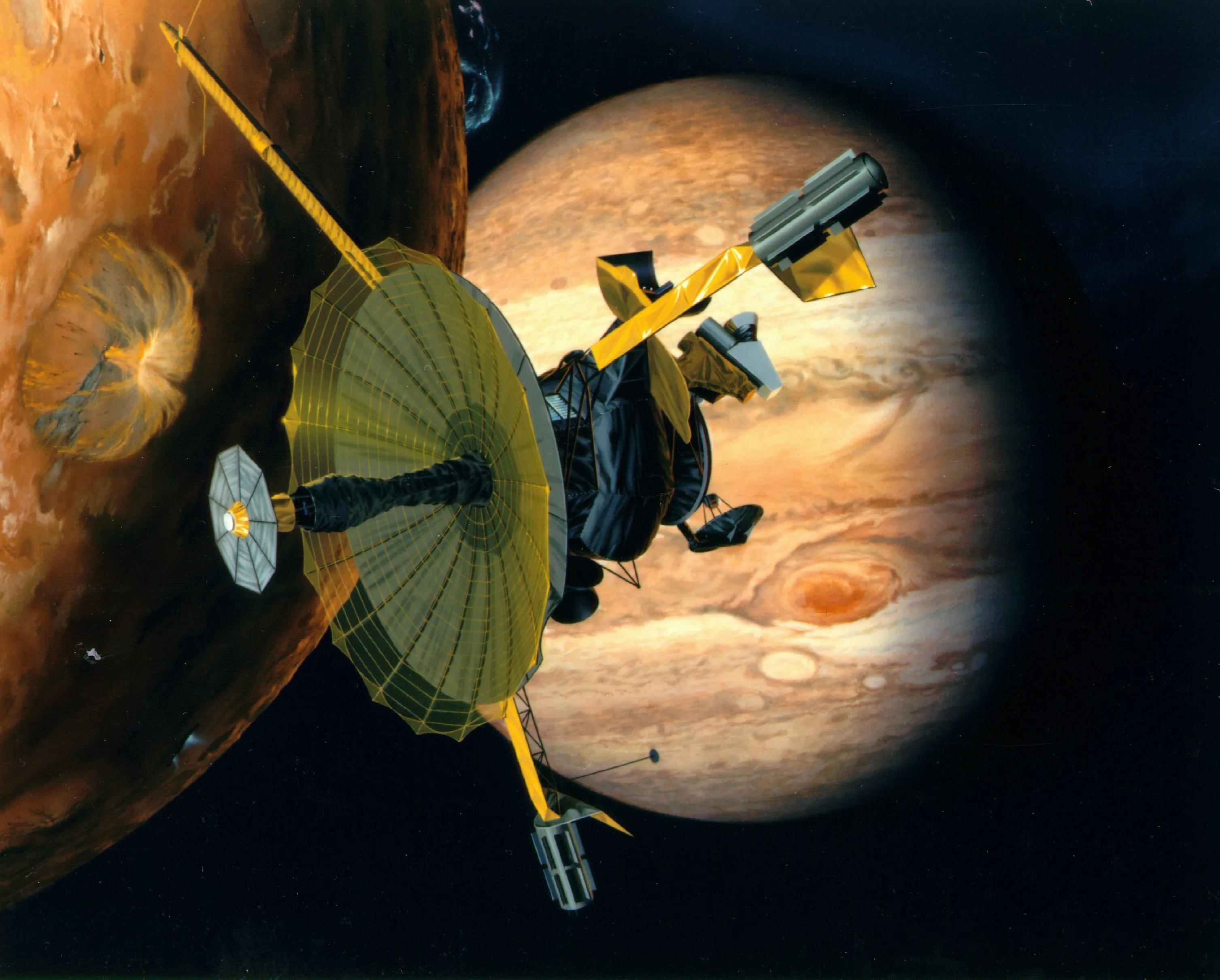
Before dawn on October 15, 1997, a Titan IVB/Centaur rocket stood fueled at Space Launch Complex 40 at Cape Canaveral, carrying one of NASA's largest and most complex planetary missions. At 08:43 UTC, it lifted off, sending the 5,600-kilogram Cassini orbiter and ESA's Huygens lander on a seven-year journey requiring flybys of Venus, Earth, and Jupiter just to reach Saturn. Fifteen years in planning and built by three space agencies, the mission would not reach Saturn's orbit until July 2004.
Cape Canaveral Air Force Station, FloridaStory page →
The American Throughline
NASA and JPL led the mission, relying on a decades-long partnership with ESA and the Italian Space Agency rather than going it alone. Cassini's four-planet gravity-assist route and its 20-year run became a case study NASA planners point to for how far a Flagship-class spacecraft can be stretched when budgets force redesign.
Did you know
QHow did the Huygens probe actually separate from Cassini on its way to Titan?
Huygens didn't fire thrusters or use explosive bolts. It relied on a Spin/Eject device that gently pushed the probe away from Cassini at just 0.35 meters per second, about the speed of a slow walk, while spinning it up to 7.5 rpm like a tossed frisbee. That spin kept Huygens stable during its unpowered coast toward Titan. The separation happened on December 25, 2004, nearly three years after launch, and the probe then drifted alone through space for three weeks before entering Titan's atmosphere.
QWhat was the backup plan if Cassini's main engine failed during the mission?
Cassini carried two identical R-4D bipropellant rocket engines, a prime and a full backup, each capable of producing 490 newtons of thrust. There was no repair option once Cassini left Earth, so the backup engine was the only safety net. The spacecraft depended on these engines for every major trajectory correction and for the critical burn that would slow it into Saturn's orbit in 2004, a maneuver with no second chance if both engines had failed.
QWhy did Cassini end its mission by deliberately crashing into Saturn?
After 13 years orbiting Saturn, Cassini was nearly out of propellant, so NASA designed a controlled plunge called the Grand Finale rather than risk an uncontrolled crash on one of Saturn's moons. Engineers threaded the spacecraft through the narrow gap between Saturn and its innermost rings on a series of increasingly risky passes before the final atmospheric entry on September 15, 2017. The maneuver protected moons like Enceladus and Titan, both considered possible habitats for life, from any contamination by Earth microbes still clinging to the spacecraft.
$17.76 your first year · then $39.99/yr · cancel anytime
Quote of the day
“Nobody will ever deprive the American people of the right to vote except the American people themselves.”
Franklin D. Roosevelt
“The fate of the country does not depend on how you vote at the polls — the worst man is as strong as the best at that game; it does not depend on what kind of paper you drop into the ballot-box once a year, but on what kind of man you drop from your chamber into the street every morning.”
Henry David Thoreau
“Let me now take a more comprehensive view, and warn you in the most solemn manner against the baneful effects of the spirit of party, generally.”