Reading 3 of 6 free1776 Club · all 6 storiesWednesday, October 14
From the desk
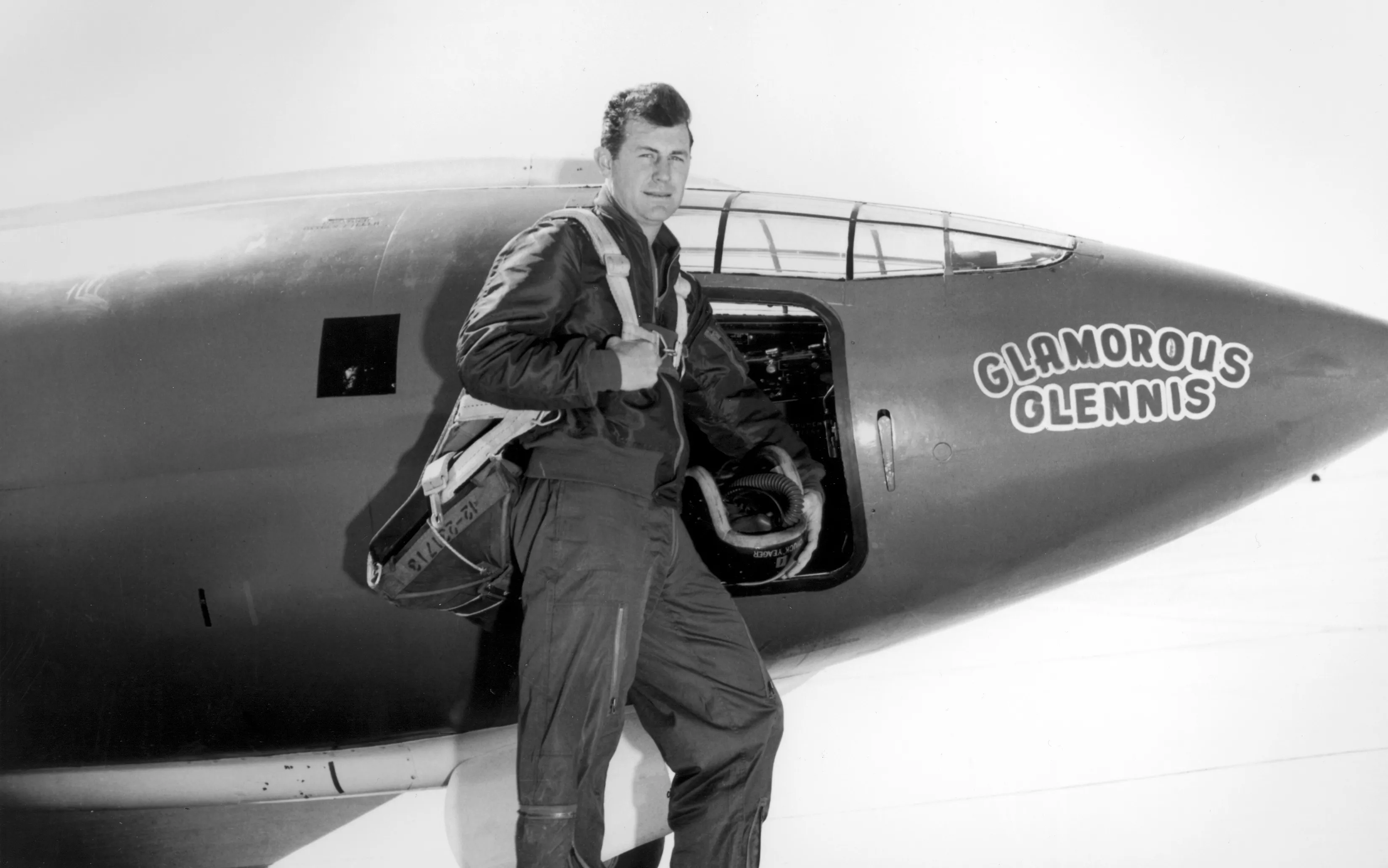
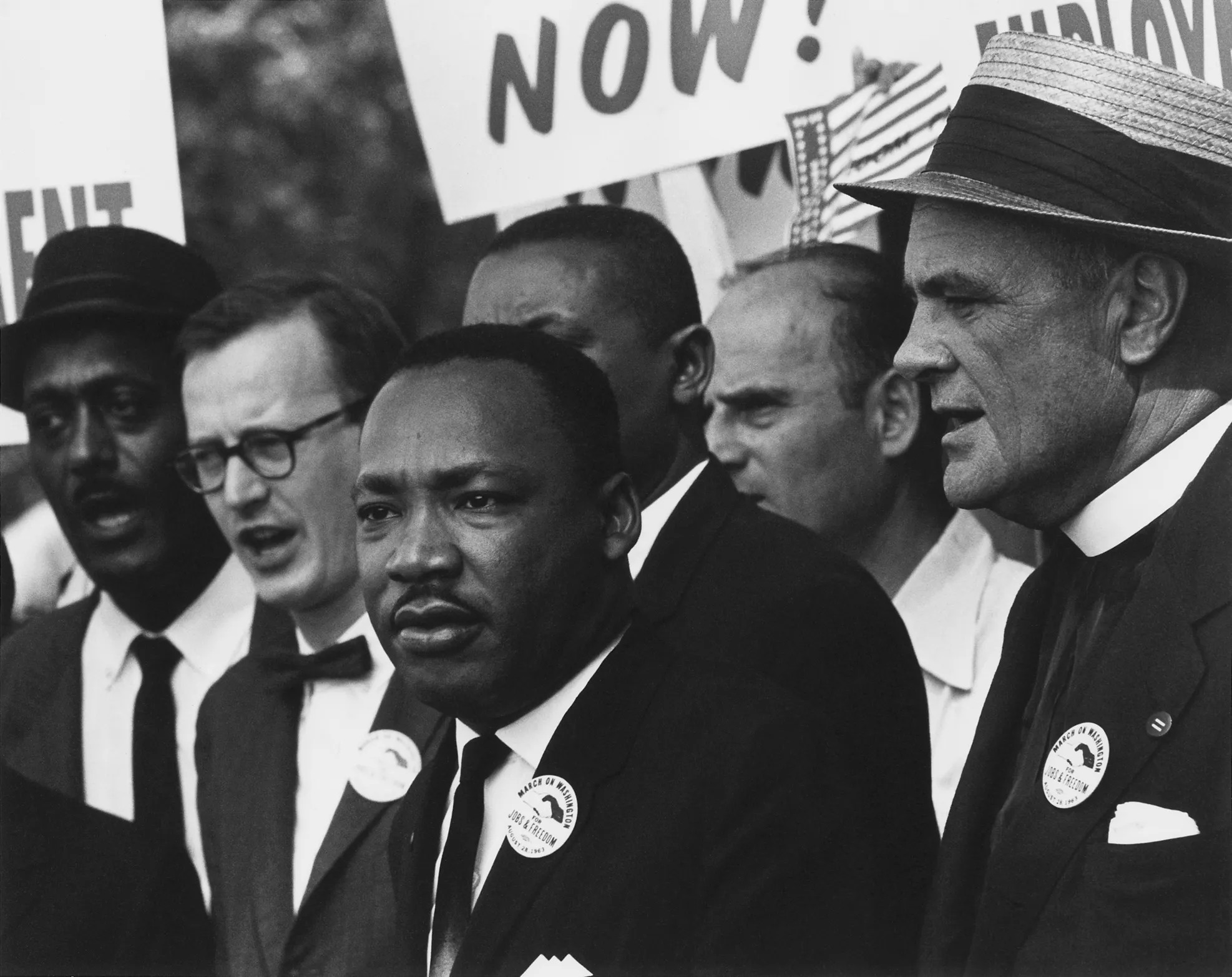
Start with 1943: 291 B-17s flew to Schweinfurt without full fighter escort, into rocket-firing German fighters that refueled mid-mission to hit them twice. Sixty bombers went down, 650 men lost, and the Eighth Air Force stayed out of deep Germany for four months. Worth a longer look: 1962, when a U-2 over San Cristobal turned six weeks of Senate suspicion into photographic proof of Soviet missiles, opening thirteen days that mattered more than most. King's Nobel and Yeager's broken ribs round out a day that ran from catastrophe to proof to triumph.
— The Patriot Compass desk
1943Featured · This day in history
Sixty B-17s go down over Schweinfurt; the Eighth Air Force loses the sky over Germany
For two years the Eighth Air Force had pushed to bomb Germany by daylight without fighter escort the whole way in. On October 14, 1943, 291 B-17s flew back to the ball bearing plants at Schweinfurt, a target they had already bombed once in August at heavy cost. German fighters hit them from the Dutch coast to the target and back, flying rocket attacks and refueling mid-mission to catch the bombers again on the way out. Sixty B-17s went down, 650 men were lost, and the Eighth would not fly that deep into Germany again for four months.
Schweinfurt exposed the flaw in American air doctrine: the belief that heavily armed bombers could defend themselves deep into enemy territory without fighter cover. The losses pushed the Army Air Forces toward long-range escorts, arriving as the P-51 Mustang in early 1944, which let bombers fly to target and back with fighter cover the whole way.
Did you know
QHow many B-17s came home from Schweinfurt too shot up to ever fly again?
Seventeen Flying Fortresses limped back to England so badly damaged that ground crews wrote them off entirely, scrapping them rather than attempting repair. That was on top of the 60 bombers lost outright over Germany, and separate from another 121 aircraft that returned carrying battle damage of varying severity. Taken together, roughly two-thirds of the 291-plane force that took off that morning came back damaged, destroyed, or never came back at all. The scrapped 17 rarely make it into casualty counts because they technically landed safely, but for the Eighth Air Force's already strained aircraft inventory, writing off 17 more Fortresses in a single afternoon was its own quiet disaster, one measured in hangars full of scrap metal rather than funerals.
QWhich fighter wing tore apart a single bomber group in just minutes near the Dutch coast?
Jagdgeschwader 3 Udet hit the bomber stream first as it crossed the coast, and in that exchange American P-47 escorts actually came out ahead, downing seven Bf 109s while losing only one Thunderbolt themselves. JG 1 Oesau and JG 26 Schlageter, two more Luftwaffe wings carrying the honorific names of German pilots, then joined the fight over the Netherlands and began making repeated passes. Jagdgeschwader 11 waited until after the bombing run, refueled and rearmed, then caught the formations again on the way home and shot down 18 B-17s by itself. JG 3, JG 1 and JG 26, and JG 11 each struck the bombers at a different point in the mission.
QWho replaced Ira Eaker as commander of the Eighth Air Force after Black Thursday's failure?
Major General Jimmy Doolittle, already famous for leading the 1942 raid on Tokyo, took command of the Eighth Air Force on January 6, 1944, just under three months after Schweinfurt. He inherited a force General Arnold had publicly dismissed as suffering only incidental losses, even as the Army's own official history conceded the Eighth had, for the time being, lost air superiority over Germany. Doolittle's arrival lined up with the final buildup toward the P-51 Mustang escorts that would fly Big Week the following month. The leadership change rarely gets attention next to the bombers and the body count, but Doolittle took over from the commander who had been in charge during Schweinfurt.
The Daily Record · free by email
Tomorrow's edition in your inbox — one story, one quote, the flag.
1774government
Congress declares Parliament's acts void; delegates demand the king repeal them
By mid-October 1774, delegates from twelve colonies had spent weeks in Philadelphia debating whether to seek reconciliation with Parliament or deny its authority outright. On October 14, the First Continental Congress adopted the Declaration of Rights and Resolves, formally condemning the Intolerable Acts and asserting that colonists retained the rights of English subjects, including a right to legislate for themselves in their own assemblies. The declaration named the Boston Port Act, the Massachusetts Government Act, the Administration of Justice Act, and the Quartering Act as violations of those rights. Six days later, Congress approved the boycott that followed.
The Declaration of Rights and Resolves was the first time colonies acting together, not as individual assemblies, told Parliament which of its laws they considered void. That collective claim to legislative authority became a model Jefferson later drew on in 1776, and the document's insistence on rights "as Englishmen" later gave way to rights claimed as Americans.
Did you know
QWhich colony sat out the First Continental Congress entirely, and why?
Georgia sent no delegates to Philadelphia in 1774. The colony's royal governor, James Wright, held unusually firm control there, and Georgia depended heavily on British military protection against Creek and Cherokee raids along its frontier, which made many of its leading colonists reluctant to join a movement openly defying the Crown. Georgia would not send delegates to a Continental Congress until the Second Congress convened in 1775, making it the last of the thirteen colonies to formally join the resistance movement.
QWhat specific trade did the Continental Association target besides British manufactured goods?
The Continental Association, approved six days after the Declaration of Rights, did not stop at British imports. It also called for an end to the transatlantic slave trade, planning nonimportation of slaves beginning December 1, 1774. The provision sat inside the same document that boycotted tea, cloth, and other British goods, making the Association as much an economic weapon against Parliament as a limited statement against the slave trade itself.
QHow sharply did the boycott actually cut trade once local committees began enforcing it?
Once committees in towns across the colonies started enforcing the Continental Association's terms, British imports into the colonies fell by roughly 97 percent in 1775 compared with the year before. That collapse came from thousands of local committeemen inspecting shipments, publishing the names of merchants who violated the boycott, and seizing goods, turning a congressional resolution into a nearly total economic blockade enforced from the ground up rather than by any central authority.
1962military
A U-2 camera finds Soviet missiles ninety miles from Florida
For about six weeks, Senator Kenneth Keating had warned that the Soviets were building something in Cuba, and U-2 flights had already spotted surface-to-air missile sites there. On October 14, 1962, an American U-2 reconnaissance plane flew over San Cristobal, Cuba, and photographed what analysts soon identified as Soviet ballistic missile installations under construction. The film landed in Washington, turning weeks of suspicion into proof. The confrontation between Kennedy and Khrushchev would run thirteen days.
The photographs forced Kennedy to confront a threat sitting ninety miles from Florida, inside range of nearly every American city east of the Mississippi. The crisis that followed produced the Moscow-Washington hotline, the first direct communication link built specifically to keep a misunderstanding from becoming a war.
$17.76 your first year · then $39.99/yr · cancel anytime
Quote of the day
“Nobody will ever deprive the American people of the right to vote except the American people themselves.”
Franklin D. Roosevelt
“The fate of the country does not depend on how you vote at the polls — the worst man is as strong as the best at that game; it does not depend on what kind of paper you drop into the ballot-box once a year, but on what kind of man you drop from your chamber into the street every morning.”
Henry David Thoreau
“Let me now take a more comprehensive view, and warn you in the most solemn manner against the baneful effects of the spirit of party, generally.”