Reading 3 of 6 free1776 Club · all 6 storiesMonday, October 12
From the desk
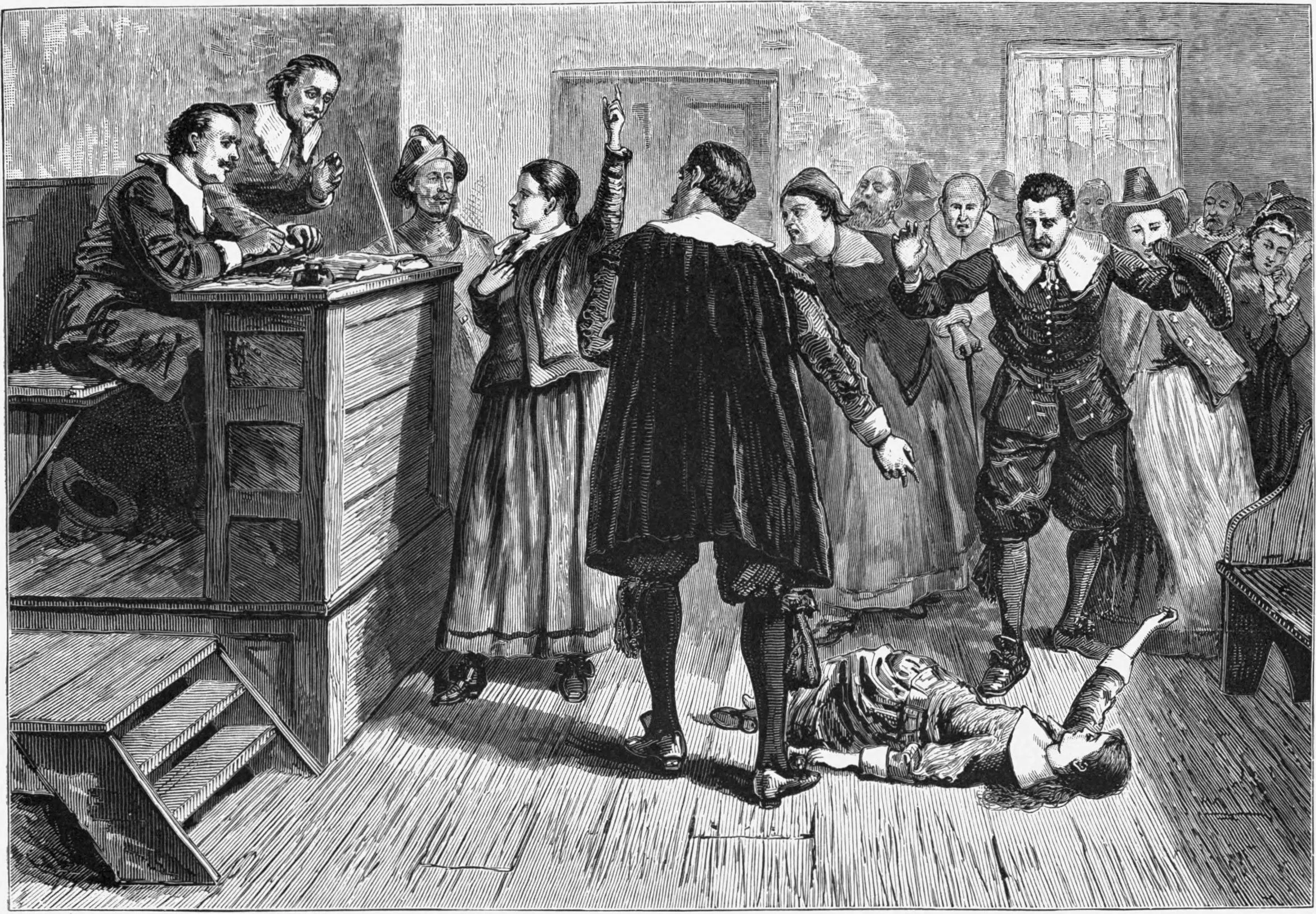
Start with 1492. A lookout named Rodrigo de Triana spotted land before dawn, Columbus went ashore convinced he'd reached the Indies. Worth a longer look: 1692, when Governor Phips finally wrote the letter that stopped the Salem hangings, after nineteen deaths, too late for all of them but not for whoever came next. The USS Cole bombing in 2000 belongs in the same sitting, a routine refueling stop that cost seventeen sailors their lives.
— The Patriot Compass desk
1492Featured · This day in history
Land ho: Columbus reaches a Caribbean island he takes for the Indies
Ten weeks after leaving Palos de la Frontera, Christopher Columbus and his crew had seen nothing but open Atlantic. Before dawn on October 12, 1492, Rodrigo de Triana, a lookout aboard the Pinta, called out land: an island in what is now the Bahamas. Columbus went ashore, named it San Salvador, and claimed it for Ferdinand and Isabella, convinced he had reached islands near the Indies. He had instead found an island in the Caribbean, where the Taíno already lived.
Columbus never set foot on the North American mainland, but the voyage he opened still shaped American national memory: a federal holiday, a national capital named for him, and a centuries-long argument over whether 1492 should be commemorated as discovery or as the start of conquest. A growing number of states now mark the same date as Indigenous Peoples' Day instead.
Did you know
QHow did Columbus keep his nervous crew from counting the miles too closely?
Columbus kept two logs of the crossing. One, shown to the crew, understated the distance sailed each day. The other, kept privately, recorded his own best estimate of how far they had actually traveled. He was managing morale on a ship where the men had agreed in advance on a deadline: if land did not appear soon, they intended to turn back regardless of what their captain wanted. The deception bought him time he badly needed, since his estimate of the voyage's total length was itself wrong by thousands of miles.
QWhat became of the roughly forty men Columbus left behind at La Navidad?
After the Santa María wrecked off Hispaniola on Christmas Day, Columbus had no room to carry her full crew home aboard the two remaining ships, the Niña and the Pinta. He left a contingent at a hastily built outpost named La Navidad and sailed on without them. It was the first Spanish settlement attempt in the Americas, built from salvaged timber rather than fresh lumber, a sign the expedition was still improvising months after the famous landfall.
QWhy is San Salvador itself still a matter of dispute among historians?
Columbus named the island he landed on San Salvador, but he left no coordinates precise enough to fix it on a modern map, and several islands in the Bahamas have been proposed as the true site ever since. Navigators, geographers, and amateur sleuths have argued the case for different islands using ship's-log reconstructions and seabed surveys. More than five centuries later, there is still no consensus on which patch of sand Columbus actually stood on first.
The Daily Record · free by email
Tomorrow's edition in your inbox — one story, one quote, the flag.
1901government
Roosevelt makes it official: the Executive Mansion is now the White House
For decades, the building at 1600 Pennsylvania Avenue carried a stiff bureaucratic label: the Executive Mansion. On October 12, 1901, President Theodore Roosevelt signed an executive order making its popular nickname, the White House, the official name. Washingtonians had already been calling it that since at least 1811. Roosevelt's order just made the paperwork match what people already said.
Roosevelt's order closed the gap between how Americans actually talked about their government and how that government described itself on paper. It was a typical Roosevelt move: brisk and unsentimental about formality for its own sake, and it fixed the name the nation has used for its executive branch ever since.
Did you know
QWhat Irish building inspired the White House's design?
James Hoban, the Irish-born architect who won the design competition, modeled the house on Leinster House in Dublin, a grand townhouse that later became the seat of the Irish parliament. Hoban brought Neoclassical proportions and symmetry from his training in Ireland and translated them into Aquia Creek sandstone instead of Dublin granite. Construction began October 13, 1792, and the building stood ready for occupancy by November 1, 1800, meaning John Adams moved into a house barely finished, with plaster still drying in places. The Dublin connection is why the North Portico and facade proportions look distinctly Georgian rather than purely American in origin, evidence of an Irish-trained architect's hand at the center of the federal government.
QWhat did John Adams pray for on his first night in the unfinished mansion?
John Adams, the first president to live in the house, wrote a blessing that is still inscribed inside it: "I pray Heaven to bestow the best of blessings on this House, and all that shall hereafter inhabit it. May none but honest and wise men ever rule under this roof." He wrote it within weeks of the building's completion in November 1800, before the structure even had a settled name, let alone the one Roosevelt would make official a century later. The line was later carved into the State Dining Room mantel on the order of Franklin D. Roosevelt, giving Adams's private wish a permanent, public home inside the house.
QWhy did Roosevelt build a new wing the year after his renaming order?
In 1902, one year after signing the renaming order, Roosevelt had every work office moved out of the main house and into a newly built West Wing. The mansion's living quarters and government offices had been crammed together for a century, and with six young Roosevelt children running through the halls alongside cabinet secretaries and clerks, the crowding had become unworkable. The West Wing separated the president's family life from his staff's workday for the first time, built one year after the renaming order. Roosevelt's two 1901-1902 moves, one on paper and one in timber and brick, changed both what the building was called and how it functioned day to day.
2000tragedy
A small boat pulls alongside the USS Cole; the blast kills 17 sailors in line for lunch
The USS Cole, a guided missile destroyer out of Norfolk, Virginia, had stopped in Aden, Yemen, for a routine refueling on October 12, 2000. Around 11:18 local time, two al-Qaeda suicide bombers steered a small boat loaded with over 1,000 pounds of C4 alongside the ship's port side and detonated it. The blast tore a 40-by-60-foot gash in the hull, killing 17 crew members, many of them lining up for lunch near the galley, and wounding 37 more. Commander Kirk Lippold's crew battled flooding for three days to keep the ship afloat.
The Cole bombing was the deadliest attack on a U.S. naval vessel since the USS Stark in 1987, and it demonstrated al-Qaeda's willingness to attack American military assets directly. The attack forced the Navy to rewrite force-protection rules for ships in foreign ports, and years later, federal courts held Sudan and Iran liable, rulings that became a template for later lawsuits against state sponsors of terrorism.
Did you know
QWhy was the USS Cole named after a Marine who never served in the Navy?
The USS Cole was named for Marine Sergeant Darrell S. Cole, who was killed on Iwo Jima during World War II. The Navy named Arleigh Burke-class destroyers after decorated combat veterans, and Cole's Medal of Honor citation for close-quarters fighting on Iwo Jima was typical of the honorees. Cole was home-ported at Naval Station Norfolk, Virginia, part of a class of guided missile destroyers built for both offensive strike and fleet defense. The contrast was striking: a ship memorializing a Marine killed in brutal ground combat became, in Aden, the victim of a different kind of close-quarters attack, one delivered not by riflemen storming a beach but by a small boat and a shaped charge.
QWhat obstacles did American investigators face once they reached the bomb site in Yemen?
FBI and Naval Criminal Investigative Service agents sent to Aden to investigate the bombing found themselves operating in hostile territory even as they worked the crime scene. Armed Yemeni special forces monitored their movements, and local opposition complicated evidence-gathering and witness access. Yemeni special forces monitored the agents throughout the investigation. Reward money of up to $5 million was offered by the U.S. government for information leading to arrests, a sign of how difficult it was to build a case through normal channels when the host government's own forces treated the investigators as outsiders, not partners.
QHow much did a federal court order Sudan to pay the Cole victims' families, and when?
A U.S. federal judge, Robert G. Doumar, ruled on March 14, 2007, that the Sudanese government was liable for the bombing, and on July 25, 2007, ordered Sudan to pay $8 million to the families of the dead sailors, stating there was "substantial evidence" that Sudan's prior actions had induced the attack. Eight years later, in March 2015, a separate federal ruling went further, finding Iran complicit alongside Sudan, the first time any court held Iran partly responsible for the Cole bombing. The two rulings, years apart, show how liability for the attack kept expanding as evidence accumulated, reaching state sponsors far from the harbor in Aden.
$17.76 your first year · then $39.99/yr · cancel anytime
Quote of the day
“Nobody will ever deprive the American people of the right to vote except the American people themselves.”
Franklin D. Roosevelt
“The fate of the country does not depend on how you vote at the polls — the worst man is as strong as the best at that game; it does not depend on what kind of paper you drop into the ballot-box once a year, but on what kind of man you drop from your chamber into the street every morning.”
Henry David Thoreau
“Let me now take a more comprehensive view, and warn you in the most solemn manner against the baneful effects of the spirit of party, generally.”