Reading 3 of 8 free1776 Club · all 8 storiesFriday, October 9
From the desk
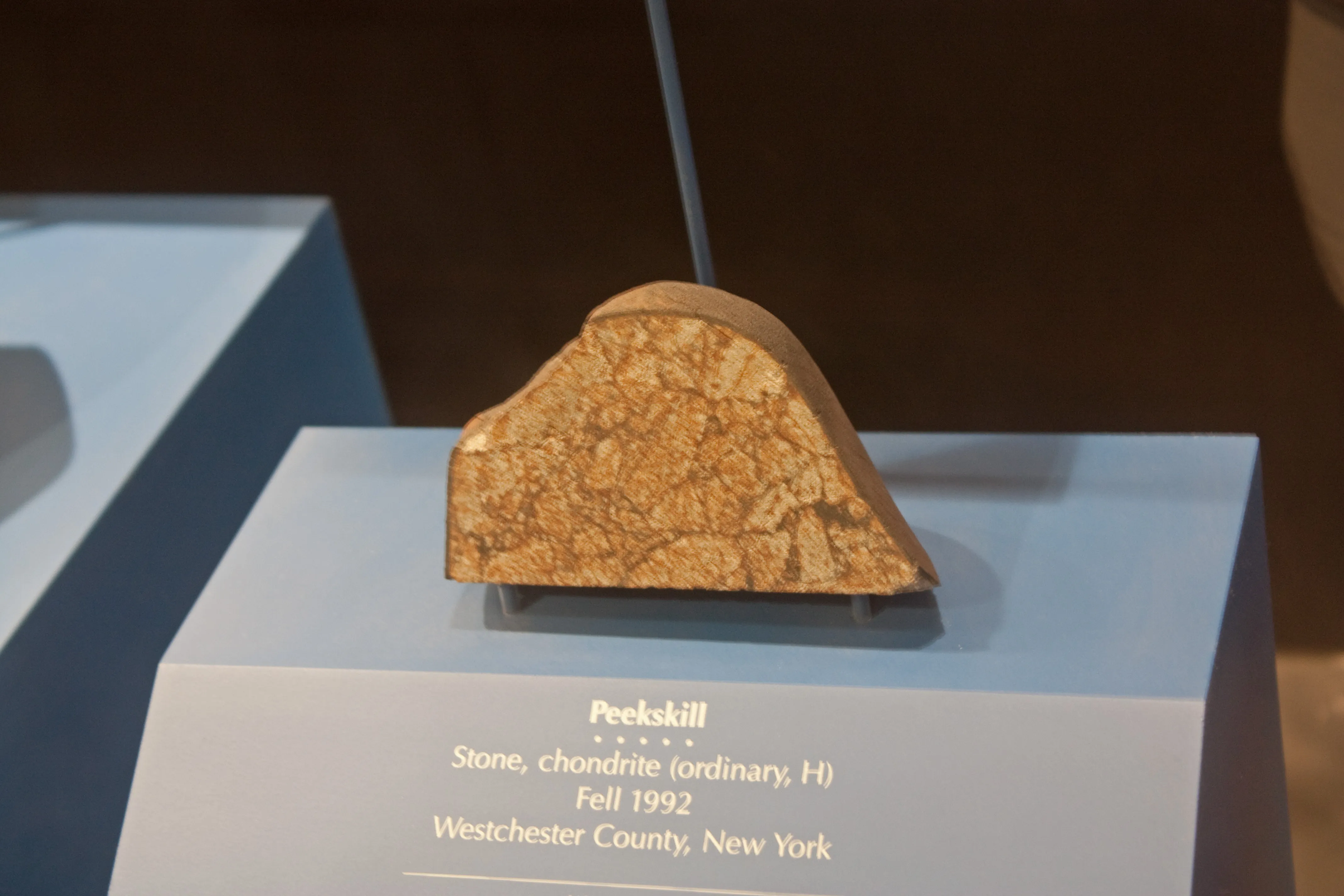
Start with 1812: Lake Erie belonged to the British outright until Lieutenant Jesse Elliott took 100 men by boat from Buffalo Creek one night and boarded two anchored brigs. Caledonia escaped with her fur cargo intact; Detroit ran aground under artillery fire and had to be burned. Worth a longer look: 1992, when a 27-pound meteorite punched through the trunk of Michelle Knapp's parked Malibu in Peekskill and buried itself in the ground, still warm, still smelling of sulfur. The Marines' Matanikau crossing in 1942 belongs in the same sitting, a staging ground denied, a timetable broken.
— The Patriot Compass desk
1812Featured · This day in history
Under cover of darkness, American sailors cut out two British brigs on Lake Erie
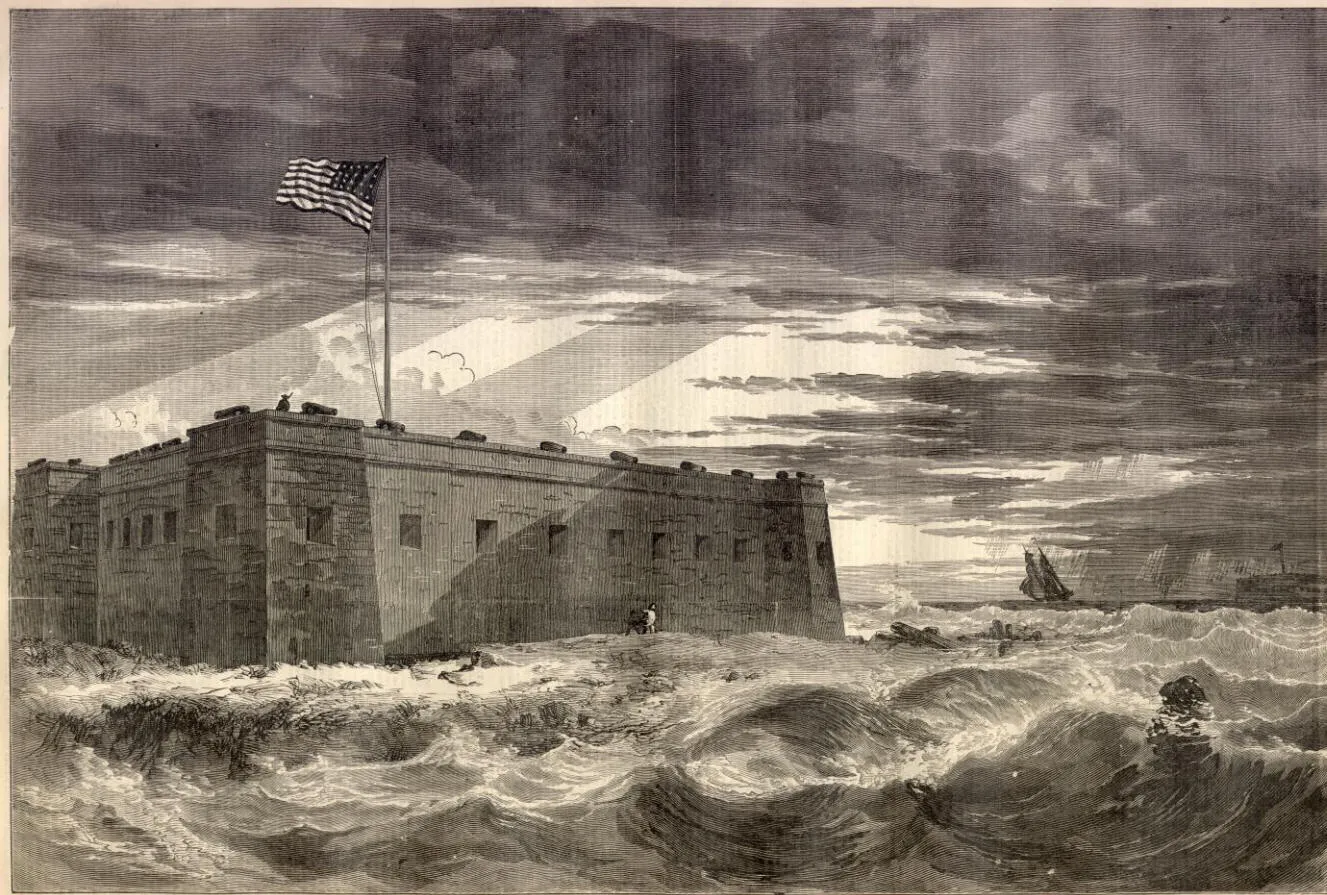
Two months after General William Hull surrendered Detroit, the British navy still owned Lake Erie outright. On October 8-9, 1812, Lieutenant Jesse Elliott led 100 men by boat from Buffalo Creek and boarded two anchored British brigs, HMS Detroit and HMS Caledonia, near Fort Erie. Caledonia reached Black Rock safely and joined the American fleet with her cargo of furs intact. Detroit ran aground under British artillery fire and, after Elliott's crew beat back an attempt to retake her, was burned where she sat.
Caledonia's capture gave the United States its first warship on Lake Erie since losing Adams/Detroit in August. She went on to serve under Oliver Hazard Perry at the Battle of Lake Erie in September 1813, the fight that broke British naval power on the lake and reopened the Old Northwest to American control.
Did you know
QWhy did a captured British warship have a cargo hold full of furs?
Caledonia was not built as a warship at all. The North West Company, a fur-trading enterprise, had her constructed as a commercial brig to haul pelts and trade goods across the Great Lakes. The Provincial Marine commandeered her for military use once war broke out, but she kept working cargo even in British hands, which is why she still had a hold full of furs the night Elliott's men climbed aboard. That cargo meant the Americans came away with both a ship and a prize of furs from a single raid.
QHow many men did Elliott actually need to take two armed British brigs by surprise?
Elliott moved with exactly 100 American sailors and soldiers, loaded into open boats for the run from Buffalo Creek. That figure covered both targets at once: enough hands to split into two boarding parties and overpower both crews before either had warning an attack was coming. Splitting a hundred men across two enemy decks in darkness gave each boarding party almost no room to recover from a mistake, but the surprise was complete enough that both ships fell before either could organize resistance. The same raiders later had to fight off a British counterattempt to retake Detroit after she grounded.
The Daily Record · free by email
Tomorrow's edition in your inbox — one story, one quote, the flag.
1942military
Marines cross the Matanikau and the Japanese line breaks
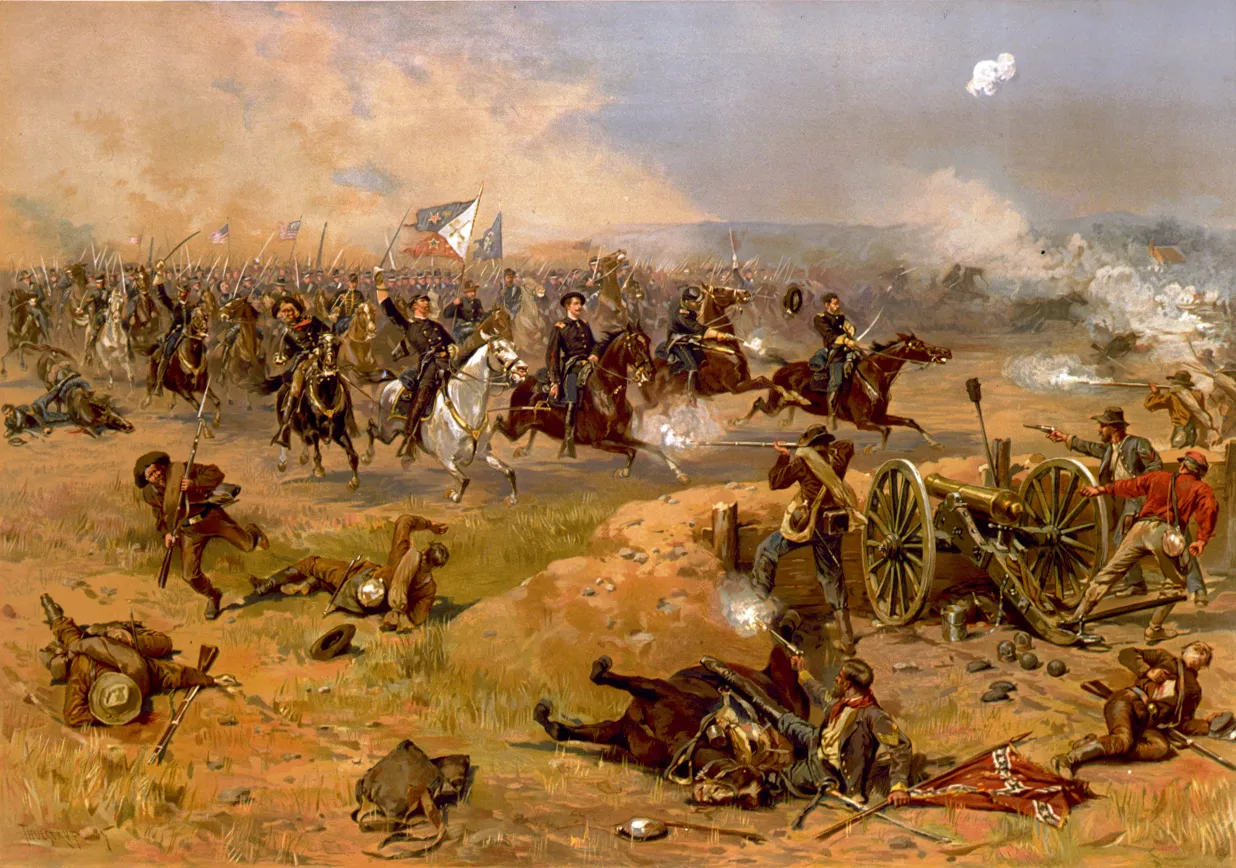
Two weeks earlier, Japanese troops had thrown Marines back from the Matanikau River, trapping three companies on the wrong bank. On October 9, 1942, a larger Marine force crossed the river and struck Japanese units under generals Masao Maruyama and Yumio Nasu, inflicting heavy losses on an infantry regiment and forcing the Japanese to retreat from their positions east of the Matanikau. The win cost the Japanese their staging ground for a planned assault on Henderson Field, forcing a delay in their timetable.
The Matanikau fighting was the first proof that American forces could out-plan and out-fight the Imperial Army on Guadalcanal rather than just survive it. The coordinated use of multiple Marine battalions with artillery and air support previewed the combined-arms doctrine the Marine Corps used across the rest of the Pacific war.
Did you know
QWhy did Guadalcanal even matter enough to fight over a river like the Matanikau?
The island sat in the path of a much larger American objective: neutralizing Rabaul, Japan's major base in the South Pacific. When Allied forces landed on Guadalcanal, Tulagi, and Florida Islands on August 7, 1942, the goal was to deny Japan use of these islands as staging points, not to hold Guadalcanal for its own sake. Tokyo answered by committing its 17th Army to retake the island, funneling in units like the 35th Infantry Brigade, the 4th Aoba Infantry Regiment, and the 28th Ichiki Infantry Regiment. The Matanikau became a flashpoint only because it offered the Japanese a place to mass those forces within striking distance of Henderson Field.
QWhat went wrong with the Marine raids on the Matanikau before Puller's men even got trapped?
Two earlier raids, on August 19 and August 29, had already hit Japanese forces in the Matanikau area and killed a number of them, but neither raid managed to deny the Japanese use of the valley as a staging ground. Vandegrift ordered another operation in September, intending it as a mop-up of scattered troops and a way to keep the main Japanese force off balance. Instead of a mop-up, it turned into the operation that trapped Puller's three companies west of the river. The August raids are easy to miss entirely, since they produced no dramatic rescue and no headline, just a pattern of incomplete victories that kept forcing the Marines back to the same stretch of jungle.
QWho actually commanded the Japanese defenders the Marines faced before Maruyama and Nasu took over?
Major General Kiyotake Kawaguchi held that role during the earlier Matanikau fighting, commanding the 35th Infantry Brigade before the heavier units under Maruyama and Nasu arrived for the October battle. The handoff reflects how fast Japan was rotating and reinforcing commanders on Guadalcanal as each attempt to dislodge the Marines failed. Kawaguchi's name rarely surfaces next to the October fight because by then the Imperial 17th Army had already shifted its bet to Maruyama and Nasu's regiments for the planned push on Henderson Field.
1888culture
The elevator starts running, and the Washington Monument finally opens to everyone
For three and a half years, the Washington Monument had stood finished but mostly off-limits, its 555 feet of marble and granite reachable only by those willing to climb the interior stairs. On October 9, 1888, that changed: the monument officially opened to the general public, with a new elevator carrying visitors up through the shaft alongside the spiraling iron staircase. The building had already been the tallest structure on Earth for about four years. Now, for the first time, ordinary Americans could actually reach the top of it.
The monument took forty years to finish, stalled for decades by a funding fight and the Civil War, before it was even walkable. Its 1888 opening turned a half-century national promise into something ordinary Americans could actually ride an elevator up and see for themselves, and made the obelisk the capital's signature civic landmark instead of a half-built reminder of the republic's near-failure to honor its founder.
Did you know
QWhat's sealed inside the monument's cornerstone?
At the northeast corner of the foundation sits a marble cornerstone containing a zinc case packed with memorabilia, a time capsule laid decades before the 1888 opening. It was part of the original 1848 construction ceremony, long before Thomas Lincoln Casey ever redesigned the foundation above it or an elevator carried a single visitor to the top. The case has remained sealed in the foundation stone ever since, sealed there during the monument's earliest and most uncertain years.
QWhy does the monument have red lights at the top?
The pyramidion, the pyramid-shaped cap at the monument's peak, has eight observation windows and eight red aircraft warning lights, two mounted on each of its four sides. They exist purely as a hazard marker for aircraft passing near the District of Columbia's tallest structure, a practical safety feature bolted onto a nineteenth-century obelisk built decades before airplanes existed.
QWhat material problem did builders hide in the monument's foundation?
Beneath the monument's recognizable marble exterior, the foundation itself is built from bluestone gneiss, an entirely different and far less glamorous stone than the three varieties of white marble used on the visible structure above it. The mismatch traces back to the monument's stop-start construction history, when funding gaps and a decades-long suspension forced builders to work with whatever durable material the foundation required, regardless of how it matched the marble exterior above it.
$17.76 your first year · then $39.99/yr · cancel anytime
Quote of the day
“Nobody will ever deprive the American people of the right to vote except the American people themselves.”
Franklin D. Roosevelt
“The fate of the country does not depend on how you vote at the polls — the worst man is as strong as the best at that game; it does not depend on what kind of paper you drop into the ballot-box once a year, but on what kind of man you drop from your chamber into the street every morning.”
Henry David Thoreau
“Let me now take a more comprehensive view, and warn you in the most solemn manner against the baneful effects of the spirit of party, generally.”