Reading 3 of 6 free1776 Club · all 6 storiesThursday, October 8
From the desk
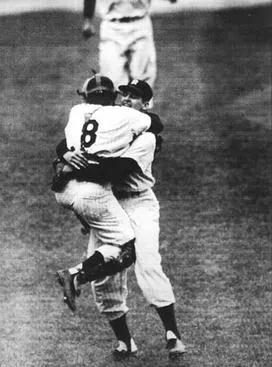
Start with Perryville, 1862. Bragg's Confederates drove McCook's Union corps back near Doctor's Creek and held the field by dark, then marched out that same night through Cumberland Gap. They won the fight and lost Kentucky for good. Worth a longer look: Don Larsen's 1956 Game 5, a pitcher who retired all 27 Dodgers he faced, something no one has repeated in a World Series since. Alvin York's 132 prisoners and Bobbie Brown's three pillboxes round out a day thick with men who turned bad positions into decisions that stuck.
— The Patriot Compass desk
1862Featured · This day in history
Bragg wins the field at Perryville, then marches away from Kentucky in the dark
By October 1862, Kentucky was a prize both armies wanted and neither fully held. West of Perryville on October 8, Confederate divisions under Braxton Bragg struck the Union left flank near Doctor's Creek, driving back Alexander McCook's corps. Union troops rallied and pushed into the streets of Perryville by dark. Bragg's men held the field by nightfall. Short of supplies and facing Union reinforcements, he pulled his army out that night and marched through Cumberland Gap. Kentucky never again left Union hands.
Perryville settled the question Lincoln had raised in 1861, when he called Kentucky key to keeping the whole war winnable. The battle kept a slaveholding border state inside the Union for good, denying the Confederacy the recruits and river access it needed, and shaping Union strategy in the war's western theater for the next two and a half years.
Did you know
QWhat triggered the very first shots fired at Perryville?
A scramble for drinking water set off the battle. Soldiers of the 10th Indiana pushed forward before dawn on October 8 to reach algae-covered pools sitting in the nearly dry bed of Doctor's Creek, the only water worth fighting over after a prolonged dry spell had turned regional streams to stagnant puddles. They ran into forward pickets of the 7th Arkansas guarding the same pools, and the two sides traded fire. Neither unit was executing a battle plan; both were simply trying to fill canteens. That skirmish over fouled, algae-slicked water grew into the opening exchange of the largest battle ever fought on Kentucky soil.
QWhat order did Bragg give once he took personal command at the Crawford house?
Bragg scrapped Polk's defensive posture and ordered a north-south realignment built around an en echelon attack, where units strike in a staggered sequence rather than all at once. Benjamin Cheatham's division was told to march north first and open the assault on the Union left, with brigades from Anderson's and Buckner's divisions following in sequence behind him. Bragg had arrived around 10 a.m. believing the real threat lay along the Springfield Pike, before he spotted Alexander McCook's I Corps troops massing north of town. The staggered attack plan, not a simple frontal assault, was Bragg's personal fix for the gapped line he found when he reached the field.
QWhy did some of McCook's own men think the Confederates were retreating before the attack hit them?
Cheatham's division kicked up such large clouds of dust marching north to open Bragg's attack that Union soldiers watching from a distance mistook the movement for a Confederate withdrawal. That misread cost them the advantage of alertness. When Cheatham's men pivoted into position and struck the Union left, the assault landed with extra force simply because McCook's troops had just convinced themselves the enemy was pulling out, not lining up to attack. A column raising dust on a dry October road worked, by accident, as cover for Bragg's attack.
The Daily Record · free by email
Tomorrow's edition in your inbox — one story, one quote, the flag.
1944military
A captain runs pillbox to pillbox under fire, and Crucifix Hill falls
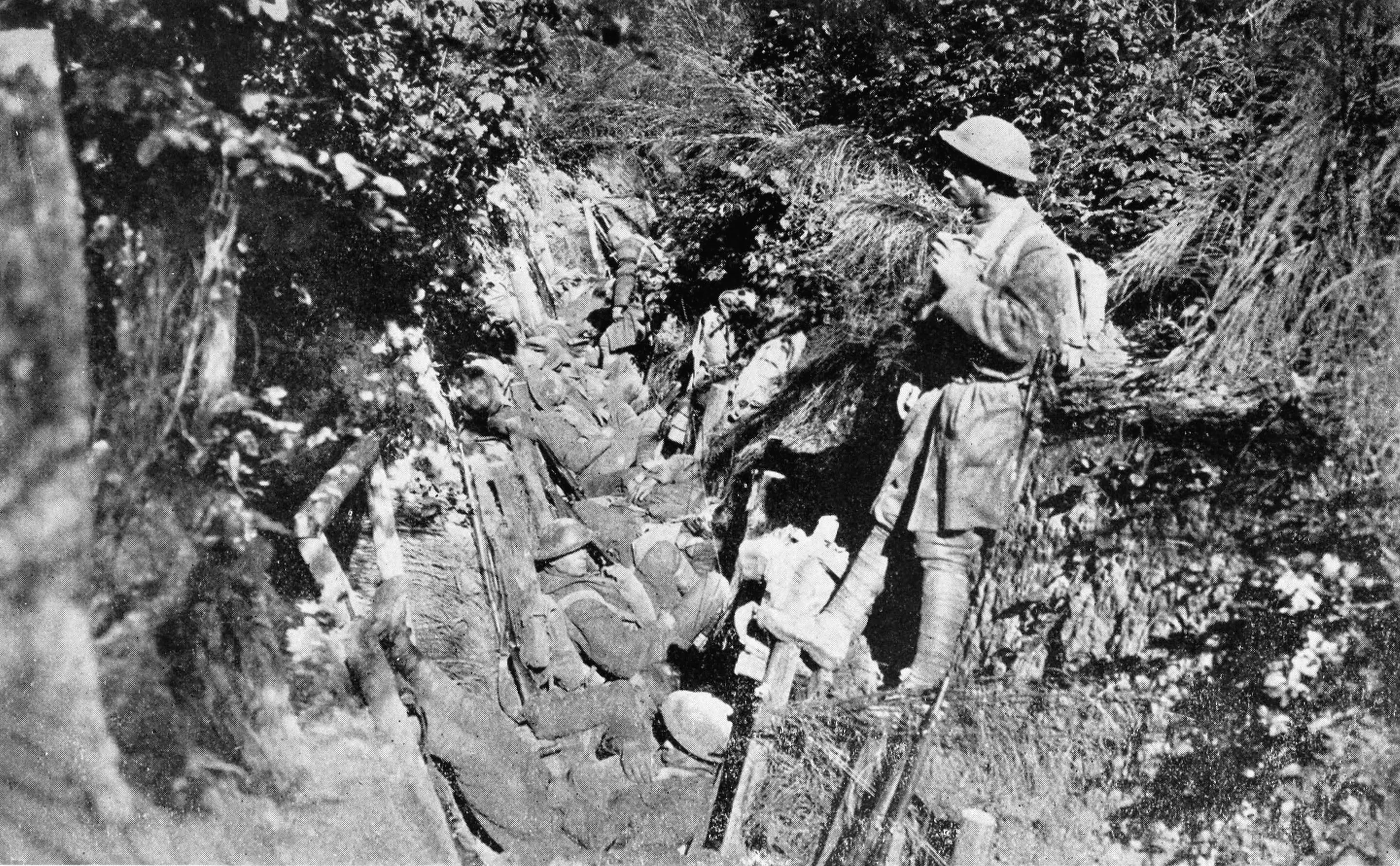
Outside Aachen, Germany, a maze of pillboxes on Crucifix Hill stood in the way of the 1st Infantry Division's attempt to encircle the city. On October 8, 1944, Capt. Bobbie E. Brown of C Company, 18th Infantry Regiment, ran 100 yards under fire three times to plant pole charges and destroy three enemy pillboxes, taking a mortar wound on the last one. He refused treatment, scouted enemy positions alone while drawing fire to expose them, and was wounded twice more before letting medics near him. His information let his company beat back the German counterattack that followed.
Brown, a former boxer who'd earned his commission in Normandy, became one of the war's most decorated infantry officers for a single afternoon's work. His Medal of Honor citation credited him with helping break open the siege of Aachen, the first German city to fall to American troops, a milestone that sharpened the Army's sense that Germany itself could be taken block by block.
Did you know
QWho commanded the 1st Battalion that was ordered to take Crucifix Hill?
Lt. Col. Henry G. Leonard Jr. held that command, reporting up to Col. George A. Smith Jr., who led the full 18th Infantry Regiment. Leonard's battalion was the unit tasked with clearing the hill, and C Company, under Capt. Bobbie Brown, was just one company operating under his orders that day. Brown's charge against the pillboxes took place within the attack plan Leonard had set in motion, though it was Brown's individual actions the Army chose to decorate. Leonard's name rarely appears outside unit records, overshadowed by the Medal of Honor citation his subordinate earned.
QWhat mistake did a 2005 video game make about when Crucifix Hill was fought?
Call of Duty 2: Big Red One, released in 2005, recreated the assault in a level simply titled "Crucifix Hill," putting players in the role of a soldier storming Hill 239. The game placed the battle in September 1944, a month earlier than the actual October 8 date. The error made it into the shipped game even though the real engagement's date is documented in Brown's Medal of Honor citation. It stands as one of the more notable date discrepancies in a game otherwise built around the 1st Infantry Division's real campaign history.
QHow long did the Germans manage to hold part of Crucifix Hill during their October 12 counterattack?
Two full German infantry regiments threw themselves at the hill on October 12, four days after Brown's assault, and briefly succeeded in overrunning sections of the American position before the day ended. American defenders fought through the day and pushed the Germans out by nightfall, meaning the recapture attempt lasted less than 24 hours from start to collapse. The cost was severe on the German side: both regiments were left virtually destroyed in the failed attempt, a casualty rate that shows how heavily the Wehrmacht was willing to spend men trying to reclaim a single fortified hilltop outside Aachen.
1921innovation
A football game goes out over the air for the first time; Pittsburgh listens in
Pittsburgh's KDKA had spent less than a year on the air, but it already had a habit of being first. On October 8, 1921, the station sent Harold Arlin to Forbes Field to call the game between Washington & Jefferson College and Carnegie Tech, giving listeners their first taste of live football by radio. There was no broadcast booth built for the job and no script for how to describe a snap or a tackle to people who couldn't see it. Arlin made it up as he went.
KDKA's football broadcast, coming in the fall after it aired the first radio broadcast of a major league baseball game in August 1921, made Pittsburgh the city where American sports radio began. The habit Arlin started that afternoon, narrating a game for an audience that could only hear it, became the model later radio and TV broadcasters would follow.
Did you know
QWhy did KDKA bother boosting its transmitter to 1,000 watts just weeks before the football broadcast?
KDKA doubled its power in stages during 1921, jumping to 500 watts on August 1 and then to 1,000 watts about two months later, right before Arlin's October 8 football call. Westinghouse was chasing range as much as novelty: a stronger signal meant the station could reach listeners well beyond Pittsburgh's city limits, which mattered once KDKA started covering live events rather than just reading election returns or playing music. The timing meant the football broadcast went out on the station's strongest signal yet, though no listener count survives to compare it with the baseball broadcast two months earlier. The station's strongest signal yet carried the same improvising announcer.
QWhat piece of equipment actually let KDKA put a voice on the air in the first place?
Vacuum-tube technology. Radio in 1921 depended on vacuum tubes to amplify and transmit audio signals clearly enough for a home receiver to pick them up, and KDKA's entire run of firsts rested on that hardware working reliably outdoors at a ballpark, not just in a controlled studio. Without that advance, there was no way to carry a human voice, rather than dots and dashes, from a transmitter at Forbes Field into a listener's living room. Arlin's voice reached listeners only because that vacuum-tube hardware worked reliably outdoors at the ballpark.
QWhat problem inside KDKA's own studio pushed the station toward new broadcasting techniques?
Acoustics. KDKA's early setup struggled with how sound behaved inside its studio space, echo, dead spots, uneven levels, and engineers had to work out fixes as they went rather than following any established playbook. Those studio fixes ended up mattering beyond the building itself, because they shaped how KDKA approached sound quality once it started sending announcers out to loud, uncontrolled venues like Forbes Field. Those same instincts for solving problems on the fly carried over when the station sent an announcer out to a crowded football stadium weeks later.
$17.76 your first year · then $39.99/yr · cancel anytime
Quote of the day
“We have all known the long loneliness and we have learned that the only solution is love and that love comes with community.”
Dorothy Day
“Whether our ancestors came here on the Mayflower, on slave ships, whether they came to Ellis Island or LAX in Los Angeles, whether they came yesterday or walked this land a thousand years ago our great challenge for the 21st century is to find a way to be One America. We can meet all the other challenges if we can go forward as One America.”
Bill Clinton
“The establishment of our new government seemed to be the last great experiment for promoting human happiness by a reasonable compact in civil society”