Reading 3 of 6 free1776 Club · all 6 storiesSunday, October 4
From the desk
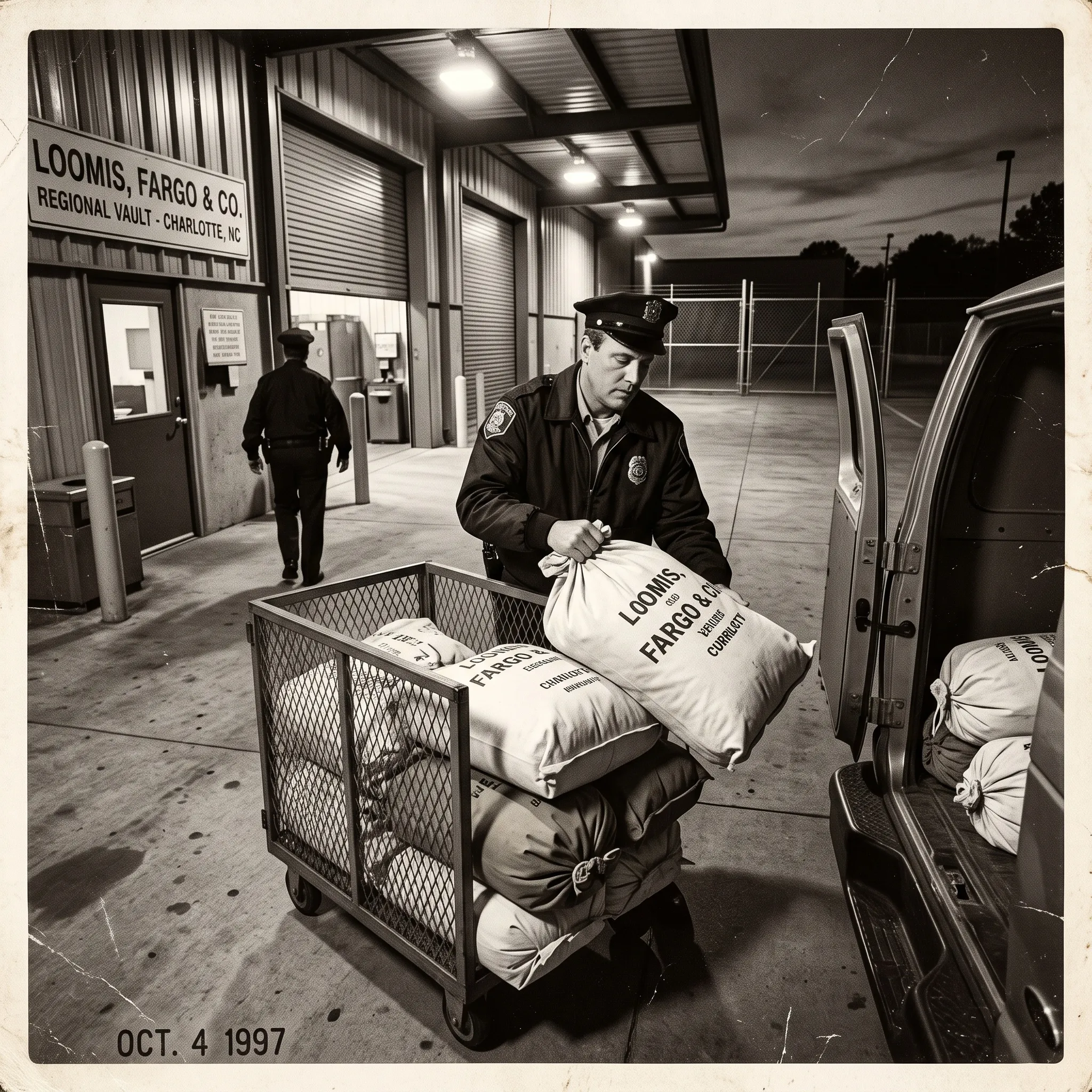
Start with 1777. Washington's four columns converged on Howe's camp at Germantown at dawn, then fog rolled in thick enough that two American columns opened fire on each other before either reached the British. Worth a longer look: the 1993 Mogadishu convoy, which pushed through Somali militia overnight to pull surrounded Rangers out of a raid that had spiraled into the Army's bloodiest single fight since Vietnam. Glance too at 1997's Loomis Fargo heist, a supervisor, a van, and $17.3 million gone by sundown.
— The Patriot Compass desk
1777Featured · This day in history
Fog swallows Washington's attack; his own columns fire on each other at Germantown
Eight days after the British took Philadelphia, George Washington moved to strike back. On October 4, 1777, he sent four columns converging on William Howe's camp at Germantown in a night march timed for a coordinated dawn assault. A heavy fog rolled in as the fighting began, and two American columns collided in the haze, each mistaking the other for the enemy and opening fire before both broke and ran. Howe's men held, and the Continental Army withdrew, the battle lost.
Germantown failed, but it convinced France that Washington's army could still mount an offensive strike against the main British force barely a week after losing its capital. That argument, made in Paris by Benjamin Franklin and Silas Deane alongside news of Saratoga, helped tip French ministers toward the alliance signed the following February, which brought a navy and treasury the Revolution could not otherwise win.
Did you know
QWhat was Washington using as a makeshift IFF system in the fog and dark?
Continental soldiers were told to stick a piece of white paper into their hats before the march began, a crude way to tell friend from foe once the fighting started in darkness and fog. It was a reasonable precaution for a night march, but it did nothing to stop Anthony Wayne's division and part of Nathanael Greene's late-arriving column from colliding blind in the mist, mistaking each other for redcoats, and opening fire on their own army. Paper hat-markers only worked at close range, and the fog that morning put Wayne's and Greene's men well beyond it. Both units broke and retreated from each other rather than from the British.
QWhy did the two militia columns at Germantown barely matter to the outcome?
Washington's plan sent two militia columns against the British flanks alongside the main Continental wings, but the militia never pressed home an attack. They succeeded only in pulling some British attention away from the center, and made no real territorial or tactical progress before withdrawing from the field entirely. Compare that to the main action, where Sullivan's column actually routed British pickets in sharp fighting and Greene's left-center column threw back the British right. The militia wings were supposed to be two coordinated flank attacks; instead they functioned as little more than a distraction that evaporated once the fog and confusion set in.
QWhat finally forced Sullivan's advancing wing to pull back from deep inside British lines?
Sullivan's column had pushed several hundred yards past Cliveden, further into British-held ground than any other American force that day, when it started running low on ammunition. Hearing cannon fire erupting behind them from the direction they had just come, the men grew dispirited and began to withdraw, uncertain whether their own army was collapsing at their backs. That retreat was what put them on a collision course with Wayne's division in the fog, since both forces were now moving back across the same contested ground from different directions. A column that had broken through British pickets pulled back for want of ammunition and the sound of a fight it could not see.
The Daily Record · free by email
Tomorrow's edition in your inbox — one story, one quote, the flag.
1862military
Galveston's mayor surrenders the city after a truce the Confederates used to haul away its cannons
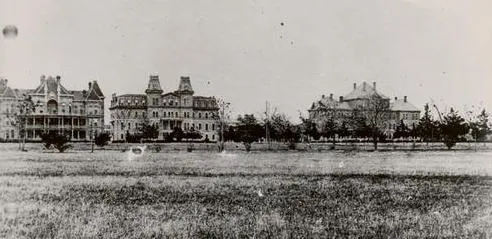
On October 4, 1862, five Union warships under Commander William B. Renshaw moved on Galveston, Texas, hoping to open a port the blockade alone had failed to shut down. A Confederate cannon at Fort Point fired a warning shot, Union ships answered and knocked it out, and a verbal four-day truce followed. Confederate Colonel Joseph J. Cook used the pause to empty the city of its remaining artillery and supplies. When the truce lapsed, Renshaw fired three signal shots, and Galveston's mayor and council rowed out to the gunboat Westfield to surrender. A detachment from the Harriet Lane raised the United States flag over the city; the National Park Service reports no casualties, though at least one other account lists casualties as unknown.
Galveston's fall led to Union control of most of the Texas coast within weeks, as part of a wider effort to choke Confederate trade from the Gulf. But Washington's failure to send infantry to hold the city, a problem tied to delays from Major General Benjamin Butler, who did not send the troops Renshaw requested, left the port exposed. Confederate forces retook it on January 1, 1863, and Renshaw was killed in the fighting.
Did you know
QWho commanded the Harriet Lane when it carried the flag ashore at Galveston?
Lieutenant Commander Jonathan Mayhew Wainwright led the Harriet Lane and personally led the 150-man detachment that raised the United States flag over Galveston. His ship had been the one sent in under a flag of truce to open talks before the shooting started, and it was his sailors, not soldiers, who occupied the city in October 1862. Wainwright's grandson and namesake later became the general who commanded U.S. forces in the Philippines in World War II. In 1862, though, this Wainwright's job was simpler: hold the flag and the dock until infantry arrived, which took months.
QHow many small Confederate detachments did Union forces capture in the weeks after Galveston fell?
Two separate incidents in November 1862 cost the Confederates small detachments, remembered by the names of the vessels involved, Henry Janes and Owasco. Neither action rose to the scale of a battle, but both reflected how thin Confederate naval and military presence had become along the Texas coast once Galveston's garrison evaporated. These captures came during the gap between the October surrender and the eventual arrival of a real infantry garrison on Christmas Day. For two months, Union control of the Texas coast rested on scattered naval patrols picking off whatever Confederate assets remained within reach, rather than any organized occupation force.
QHow many Confederate troops were actually in the region when Galveston fell?
Despite Galveston's thin defenses, Confederate strength in the broader area was not small. Roughly 5,000 troops were stationed in and around Houston and along the rail line connecting Houston to Galveston. They simply were not positioned to defend the port itself, which had been written off as indefensible and stripped of most of its cannons before the Union squadron ever appeared. The city's fall was a failure of positioning, not of Confederate manpower.
1993military
By dawn, a relief convoy finally reaches the surrounded Americans in Mogadishu
What began as a planned one-hour raid to snatch two of Mohamed Farrah Aidid's lieutenants had, by the morning of October 4, 1993, become the deadliest single battle for American troops since Vietnam. Overnight, Rangers and Delta operators had dug in around two downed Black Hawk helicopters while Somali militia fighters pressed in from every street. Before dawn, a UNOSOM II convoy of Pakistani and Malaysian armor, reinforced by American troops, pushed through the city and pulled the surrounded soldiers out. Eighteen Americans and one Malaysian peacekeeper were dead, and Somali casualties, fighters and civilians together, ran into the hundreds.
The battle ended Operation Gothic Serpent, and within six months all US combat troops had withdrawn from Somalia, with the full UN mission ending by early 1995. Images of a captured pilot and dead soldiers dragged through Mogadishu's streets turned Washington against ground deployments in African conflicts for a generation. Policymakers later called this reflex the Somalia Syndrome, and it influenced US hesitation before Rwanda.
Did you know
QWhat triggered the UN's military campaign against Aidid months before the Black Hawks went down?
In June 1993, Pakistani troops inspecting a Somali National Alliance radio station and weapons-storage site were attacked, and the losses were severe enough that the United Nations formally blamed General Mohamed Farrah Aidid and launched military operations against him. That decision set the stage for the July "Bloody Monday" raid and, ultimately, the October mission to capture his lieutenants. Robert B. Oakley later drew a sharp line through the timeline, noting that before July 12th the US was attacked only because of its association with the UN, but afterward American forces were singled out directly. That June attack on the radio station is what shifted the UN mission from famine relief toward hunting Aidid.
$17.76 your first year · then $39.99/yr · cancel anytime
Quote of the day
“Quality is more important than quantity. One home run is much better than two doubles.”
Steve Jobs
“Let us ever remember that our interest is in concord, not in conflict; and that our real eminence rests in the victories of peace, not those of war.”
William McKinley
“The jaws of power are always open to devour, and her arm is always stretched out, if possible, to destroy the freedom of thinking, speaking, and writing.”