Reading 3 of 7 free1776 Club · all 7 storiesWednesday, September 30
From the desk
Start with 1949: the Berlin Airlift's last flight touched down, 278,228 flights and 2,334,374 tons after the first, most of it coal hauled in to beat a winter Stalin had hoped would starve West Berlin into submission. Worth a longer look: 1968, when Boeing rolled the first 747 out of a plant built just to hold it, a plane the public got to see before it had flown a single mile. Also on the sheet: James Dean's Porsche met a Ford Tudor near Cholame in 1955, and outran nothing.
— The Patriot Compass desk
1949Featured · This day in history
The last plane lands, and Operation Vittles is over
The blockade itself had already broken in May, when Stalin reopened the roads into Berlin. But the airlift kept flying through the summer to build a stockpile against winter. On September 30, 1949, the last flights touched down and Operation Vittles officially ended, fifteen months and 278,228 flights after it began. American and British crews had delivered 2,334,374 tons of supplies, nearly two-thirds of it coal, to keep 2.25 million West Berliners fed and warm without abandoning the city to Soviet control.
The airlift set the template for Cold War containment: American power projected through logistics, not combat. General Clay's estimate of 600 tons a day, scrawled out for a sustained effort of seventy C-47s, became the sustained air bridge that convinced Washington that West Berlin was worth defending. That conviction carried West Germany into NATO by 1955.
Did you know
QWhat sparked the crisis that led to the blockade in the first place?
A collision, not a currency dispute, marked the first fatal blow. On April 5, 1948, a Soviet Yakovlev Yak-3 fighter buzzing a British Vickers Viking 1B airliner near RAF Gatow clipped the plane, killing everyone aboard both aircraft. The incident came weeks after Soviet military commander Vasily Sokolovsky walked out of the last Allied Control Council meeting on March 20, 1948, declaring 'I see no sense in continuing this meeting, and I declare it adjourned.' Both events came months before the blockade formally began that June. Harry Truman later noted the four-power machinery had already become unworkable for most of Germany; Berlin was where that breakdown turned dangerous.
QWhich countries besides Britain and America put pilots in the air over Berlin?
The RAF's effort wasn't purely British. Air crews from Canada, Australia, New Zealand and South Africa flew alongside British squadrons throughout the operation, turning Plainfare into a Commonwealth-wide undertaking rather than a solely British one. France, meanwhile, kept its air force out of the general relief effort entirely, flying only enough missions to supply its own military garrison in Berlin. That split reflected how unevenly the burden of occupying and defending Berlin was actually shared among the wartime allies still governing the city.
QHow did Stalin try to make the Western Allies fold without firing a shot?
Stalin offered a straightforward trade: end the blockade if the Allies withdrew the Deutsche Mark from West Berlin. The currency, introduced by the Western powers as part of merging their occupation zones into a stable West Germany, was the immediate trigger Moscow cited for sealing off rail, road and canal access in June 1948. Soviet planners had already restricted access gradually, restricting military and passenger traffic that March and rolling out their own East German mark in June. The Soviet Military Administration in Germany reportedly celebrated the blockade's start, calculating that Britain, France and the United States had no real alternative but to comply and abandon the currency.
The Daily Record · free by email
Tomorrow's edition in your inbox — one story, one quote, the flag.
1968innovation
A jet 2½ times the size of anything flying rolls out of Boeing's new Everett plant
By the mid-1960s, Pan Am wanted a jet big enough to cut seat costs by 30 percent, and Boeing had spent two years building a factory just to make one. On September 30, 1968, the first Boeing 747 rolled out of the new Everett Plant in Washington state, built for Pan Am and shown that day to the public and to representatives of the 26 airlines that had already placed orders. The plane had not yet flown. It had not yet flown a single mile, in a building so large it remains the biggest by volume ever constructed.
Pan Am president Juan Trippe forced the 747 into existence by demanding a plane 2½ times the size of the 707, and Boeing bet the company on building it, spending $1 billion and erecting the world's largest building to do so. The rollout put an American manufacturer at the center of global air travel, a position Boeing held until the last 747 left the line in January 2023.
Did you know
QHow fast was the 747 designed to fly, and what shape made that possible?
Boeing gave the 747 a wing swept back at 37.5 degrees, a steep angle chosen to let the jumbo cruise at Mach 0.85, nearly the speed of the smaller 707s and DC-8s it was meant to outclass. Combined with advanced high-lift devices on the wings, the design let a plane 2½ times heavier than existing jets still operate out of the same runways and airports built for smaller aircraft. Engineers paired that speed with a partial double-deck fuselage, a shape unheard of in commercial aviation at the time. The result was a jet that could carry far more people without demanding new infrastructure. The 747 could use the same runways as smaller jets despite its size.
QHow many people did a standard 747 actually seat, and how was the cabin divided?
A typical 747 carried 366 passengers arranged across three travel classes, with economy seating set ten seats across in each row. That density was central to the economics Pan Am demanded: cramming more paying seats into a single hull was how the airline expected to cut its per-seat costs by 30 percent. Most jets of the era carried well under half that count. Ten-abreast seating became a standard so enduring that it still shapes wide-body cabin layouts on jets built decades later. A single airframe now carried what once took two or three flights to move.
QWhich two engine makers eventually joined Pratt & Whitney on the 747 program?
Pratt & Whitney's JT9D turbofans powered the first 747s off the Everett line, but Boeing later opened the airframe to competing engines from General Electric and Rolls-Royce. GE supplied its CF6 turbofan and Rolls-Royce its RB211, giving airlines a choice of powerplant rather than locking them into a single supplier. That flexibility helped the 747 stay in production across decades and multiple airline generations, long after its original engines had been superseded. The aircraft's airframe outlasted any one engine family built for it. By the time the last 747 left the line in 2023, the jet had flown behind engines from three different manufacturers: Pratt & Whitney, General Electric, and Rolls-Royce.
1955tragedy
James Dean's Porsche collides with a Ford near Cholame, California; the actor is dead within the hour
About two and a quarter hours after being cited for doing 65 in a 55 zone, James Dean was still pushing his new Porsche 550 Spyder west toward a weekend road race in Salinas. At the junction of US 466 and SR 41 near Cholame, a 1950 Ford Tudor driven by 23-year-old Donald Turnupseed turned left across the highway without seeing him. The Spyder cartwheeled into a gully. Dean, 24, was pronounced dead at Paso Robles War Memorial Hospital at 6:20 p.m., about thirty-five minutes after impact.
Dean died having made three films, one of them, Giant, not yet released. His death mid-career, at the wheel of a car he wasn't supposed to be racing, fixed him permanently as young and unfinished in the American imagination, a template later stars from Elvis to Kurt Cobain were measured against. The crossroads still bears his name on a state highway sign.
Did you know
QWhy was Dean's Porsche nicknamed "Little Bastard"?
Accounts trace the nickname to either Warner Bros. president Jack L. Warner or stunt driver Bill Hickman, used after Dean refused to vacate his studio trailer, or, in another version, as Hickman's nickname for Dean during a mutual joking rivalry. Dean liked it enough to have custom car painter Dean Jeffries stencil "Little Bastard" on the Porsche 550 Spyder alongside the racing number 130. The car had barely been his a few weeks; he'd traded in an earlier Porsche Speedster that same year to get it. He never raced it competitively before the crash.
QWho else got a speeding ticket that afternoon besides Dean?
When CHP Officer Otie Hunter stopped Dean south of Bakersfield for driving 65 in a 55 zone, Dean wasn't alone on the road, stunt driver Bill Hickman, trailing behind in a separate vehicle, was pulled over and cited too. Hunter's traffic stop happened around 3:30 p.m., roughly two and a quarter hours before the crash at Cholame. It meant two vehicles tied to Dean's convoy picked up tickets on the same stretch of highway that same day.
QWhat happened to Rolf Wütherich after he survived the crash?
Dean's passenger, factory-trained Porsche mechanic Rolf Wütherich, was thrown from the Spyder and survived with a broken jaw, hip, and femur. He recovered from those injuries but never fully escaped car crashes: in 1981, twenty-six years after Cholame, Wütherich died in a separate, unrelated automobile accident. The man who'd been sitting beside the era's most famous car-crash victim became a fatal statistic of the same kind of wreck decades later.
$17.76 your first year · then $39.99/yr · cancel anytime
Quote of the day
“Quality is more important than quantity. One home run is much better than two doubles.”
Steve Jobs
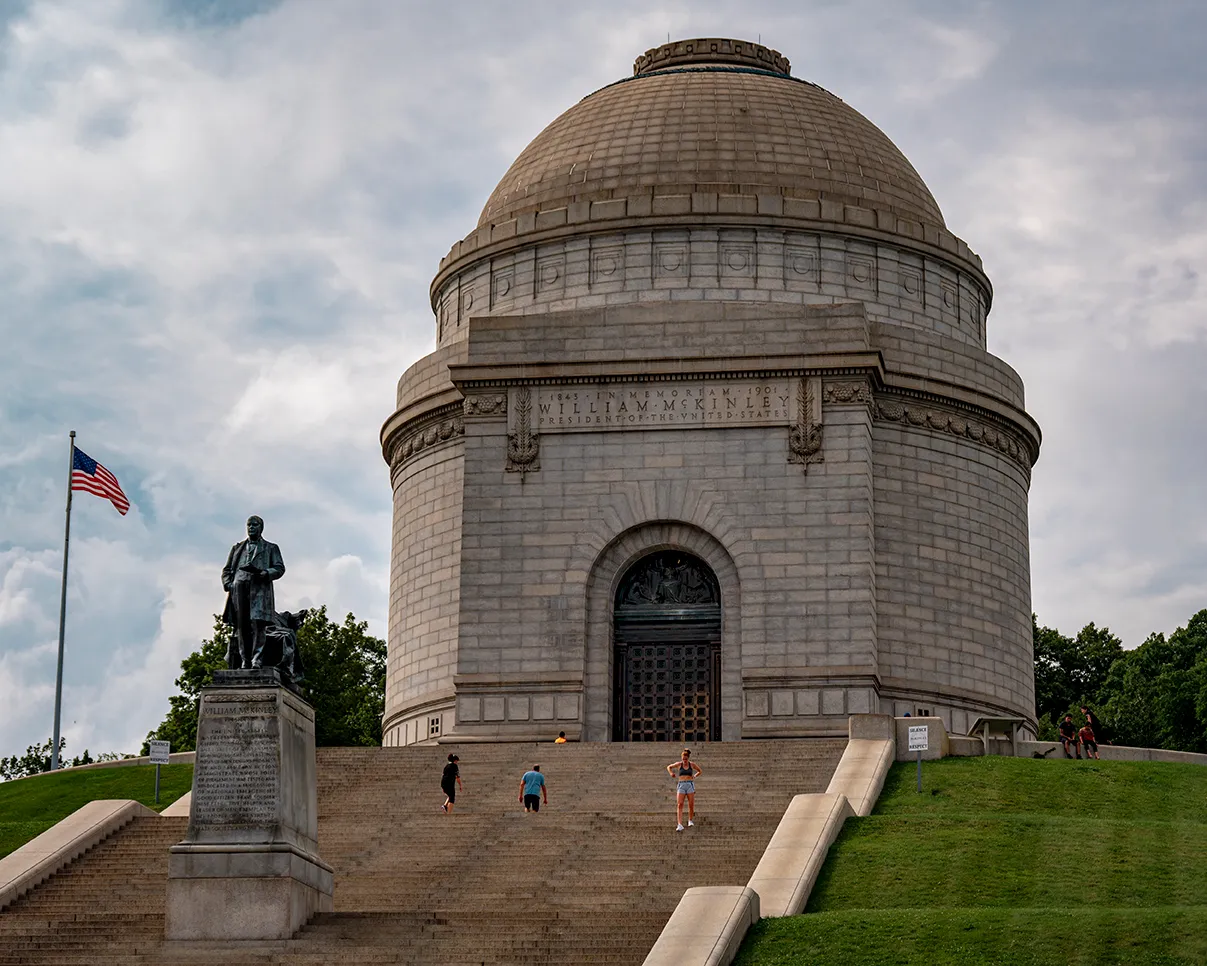
“Let us ever remember that our interest is in concord, not in conflict; and that our real eminence rests in the victories of peace, not those of war.”
William McKinley
“The jaws of power are always open to devour, and her arm is always stretched out, if possible, to destroy the freedom of thinking, speaking, and writing.”