Reading 3 of 6 free1776 Club · all 6 storiesMonday, September 28
From the desk
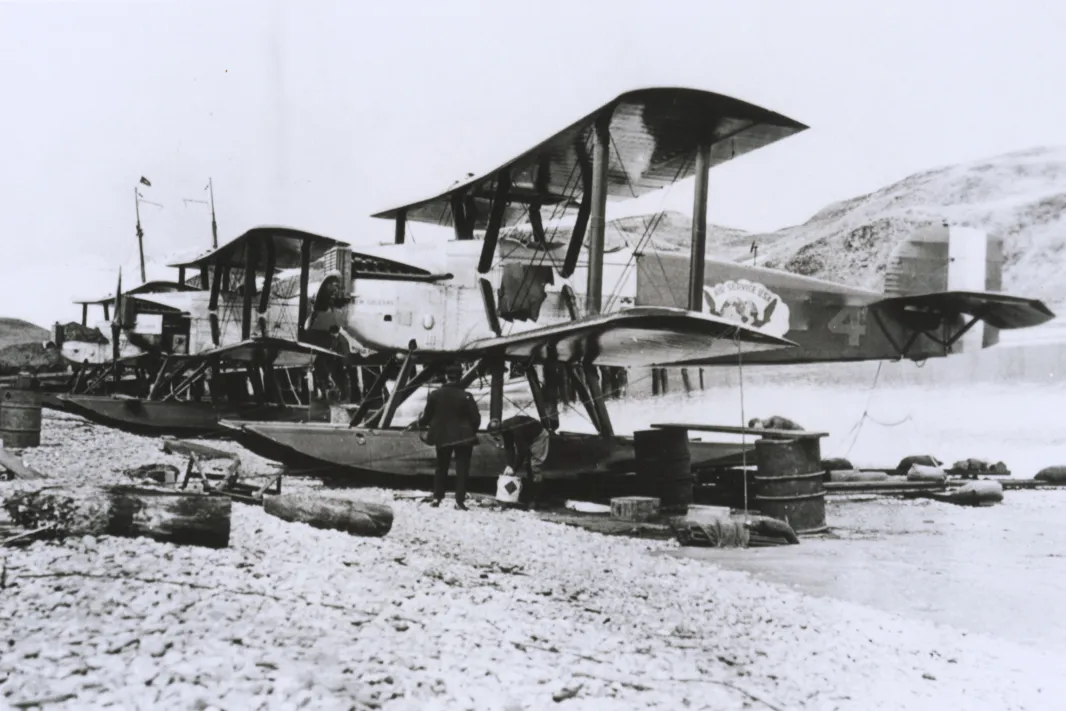
Start with 1781: Washington marching the combined American and French army out of Williamsburg to ring Yorktown, the French taking the left, the Americans the right, Washington himself riding the British lines that afternoon while soldiers hunted wild hogs for supper under open sky. Worth a longer look: 1924, when two of four Army biplanes that left Seattle to circle the globe came gliding back onto the water, 26,345 miles on dead reckoning alone, all eight airmen alive despite losing half the fleet. Falcon 1's fourth-try orbit in 2008 rounds out a day about persistence paying off, barely, in time.
— The Patriot Compass desk
1781Featured · This day in history
Washington surrounds Cornwallis at Yorktown; the armies sleep in the open
For weeks Cornwallis had been digging in at Yorktown, waiting on ships that never got past de Grasse's blockade. On September 28, 1781, Washington led the combined American and French army out of Williamsburg and marched it into position around the town, the French taking the left, the Americans the place of honor on the right. Washington himself rode along the British lines that afternoon, sizing up the earthworks. That night the armies slept outdoors while engineers bridged the marsh, and hungry soldiers went hunting wild hogs for supper.
This was the Continental Army's last major field maneuver of the war, and Washington ran it himself, at the head of French regulars who deferred to his command. The encirclement that began this day led directly to Cornwallis's surrender three weeks later, which brought Britain to the negotiating table and left Yorktown fixed in American memory as the war's last battlefield.
Did you know
QWhat happened when a British storming party tried to knock out the allied guns on October 15?
Colonel Robert Abercromby led a British sortie meant to spike the allied artillery before it could finish the job, and as his men charged he shouted, "Push on my brave boys, and skin the bastards!" The raid managed to disable a handful of guns, but allied crews had them back in action within hours. It was one of the last aggressive moves Cornwallis's garrison had left in it. Two days later he was asking for terms. Abercromby's line survives as one of the few recorded battle cries from the British side of the siege, one of the few lines of dialogue recorded from the siege.
QHow did the Americans finally break into Redoubt No. 10 on October 14?
A British sentry spotted the advancing column, challenged them, and fired a single shot. The Americans answered with a bayonet charge instead of returning fire, chopping through the wooden abatis with axes while men climbed over the walls by standing on each other's shoulders. Alexander Hamilton led the assault while John Laurens circled to the rear to block any British escape. Inside, Major Campbell, the redoubt's commander, was captured along with his garrison. Someone in the ranks yelled "Rush on boys! The fort's ours!" as the position fell. The whole action took about ten minutes, a stunning contrast to the deliberate month of digging that preceded it.
QWhat did Cornwallis do to his own fleet inside Yorktown harbor?
Facing relentless allied bombardment that sent cannonballs sailing clear across the town and into the water, Cornwallis ordered more than a dozen of his own ships sunk in the harbor as the bombardment intensified. The wrecks did little to change the outcome of the bombardment. By mid-October, his garrison was also pitching tents inside the trenches themselves and losing men to desertion in growing numbers, conditions that only worsened in the days before the surrender request went out.
The Daily Record · free by email
Tomorrow's edition in your inbox — one story, one quote, the flag.
1779government
Huntington takes the chair of Congress, succeeding Jay
Congress needed a steady hand at the front of the room, not another power broker. On September 28, 1779, delegates elected Samuel Huntington of Connecticut as President of the Continental Congress, replacing John Jay, who had left to become minister to Spain. The office carried no executive authority, just correspondence and presiding duties. Delegates settled on Huntington for his calm reputation, with the war now in its fourth year.
Huntington's presidency spanned the gap between the Declaration and the Articles of Confederation, the country's first attempt at a national government. He kept urging states to fund troops and supplies through the war's leanest years, and he stayed on past the one-year term the Articles later set, though the Articles later fixed the term at one year, closing that loophole.
Did you know
QWhat job did Samuel Huntington go back to after leaving the presidency of Congress?
He returned to Connecticut and resumed his work as a judge, the profession he had practiced before national politics pulled him away. His self-taught legal training shaped much of his later career. Huntington had trained as a lawyer without the benefit of formal schooling, working his way onto the Connecticut bench through self-study before ever signing the Declaration of Independence. After his 1781 resignation from the presidency, his judicial duties in Connecticut, to which he had already returned as a justice, continued to occupy him and later rose further, winning election as Connecticut's governor. The path from courtroom to national chair and back again marked the arc of his public life.
QHow many years did Huntington actually hold the presidency of Congress before illness ended his term?
Nearly two years: he took the chair on September 28, 1779, and did not resign until July 9, 1781. That stretch made him one of the longer-serving presidents of the Continental Congress, though still shorter than John Hancock's record 2-year, 5-month tenure. His tenure spanned the ratification of the Articles of Confederation itself, meaning he was presiding when the government's first written charter finally took effect. Only failing health broke the run, since the one-year limit the Articles eventually imposed did not yet bind him when his term began.
QWhat earlier document, besides the Articles of Confederation, did Huntington put his signature to before taking the presidency?
The Declaration of Independence, which he signed as one of Connecticut's delegates years before delegates ever considered him for the chair of Congress. That signature placed him among a small group of men who put their names to both founding documents, the Declaration and the Articles. By the time Congress elected him president in 1779, he was already a known Connecticut lawyer and judge with that signature behind him, which gave the delegates a track record to weigh alongside his reputation for steadiness. Few other officeholders of the period could claim both signatures on their record.
1787government
Congress votes to send the new Constitution to the states for approval
Eleven days after delegates in Philadelphia signed a new charter of government, the Congress of the Confederation had to decide whether to let the country vote on it at all. In September 1787, the Congress of the Confederation, the sitting national legislature under the Articles of Confederation, voted to transmit the Constitution to the thirteen state legislatures for ratification. Congress did not endorse or condemn the document; it simply passed it along. The decision put the country's future government in the hands of state conventions rather than Congress itself.
This vote marks the moment the old confederation government stepped aside for the new republic:: the very Congress the Constitution would abolish did not stand in its way. That single procedural act opened the ratification fight in the states, which would consume the next ten months and produce The Federalist Papers and some of the closest votes in American founding history.
Did you know
QWhy did the Philadelphia Convention take eleven days longer than scheduled just to start?
The Convention was set to open May 14, 1787, but on that day only the Pennsylvania and Virginia delegations had actually arrived in the city. Bad roads, slow travel, and the sheer distance some delegates had to cover from states like Georgia and New Hampshire meant the other delegations trickled in over the following days. A working quorum of seven states was not reached until May 25, more than a week late. That delay meant the entire summer of drafting and debate was compressed into less time than organizers had originally hoped for, yet the delegates still produced a finished text by September 17.
QWho actually ran the room while the Constitution was being written?
George Washington presided over the Philadelphia Convention, but the drafting itself leaned on a smaller circle of working delegates who shaped the language and argued the hardest points. James Madison, James Wilson, and Gouverneur Morris did much of the intellectual heavy lifting, while Benjamin Franklin and Alexander Hamilton lent the proceedings their reputations, and George Mason pushed positions that put him at odds with the final document. Franklin, in his eighties, was reportedly carried to sessions. Washington's chief function was chairing debate and lending his presence the weight of unquestioned authority, not authoring clauses himself.
QHow many delegates actually put their names on the Constitution the day it was approved?
On September 17, 1787, thirty-nine delegates signed the finished Constitution in Philadelphia, a number smaller than the roughly fifty-five who had attended sessions over the summer. Some delegates, including George Mason, had left or refused to sign because they objected to specific provisions. The secrecy rule that governed the entire convention meant none of this internal disagreement reached the public until the document itself was released, so Americans read a Constitution with thirty-nine names attached without knowing which absent delegates had walked away and why.
$17.76 your first year · then $39.99/yr · cancel anytime
Quote of the day
“Nobody will ever deprive the American people of the right to vote except the American people themselves.”
Franklin D. Roosevelt
“The fate of the country does not depend on how you vote at the polls — the worst man is as strong as the best at that game; it does not depend on what kind of paper you drop into the ballot-box once a year, but on what kind of man you drop from your chamber into the street every morning.”
Henry David Thoreau
“Let me now take a more comprehensive view, and warn you in the most solemn manner against the baneful effects of the spirit of party, generally.”