Reading 3 of 6 free1776 Club · all 6 storiesThursday, September 24
From the desk
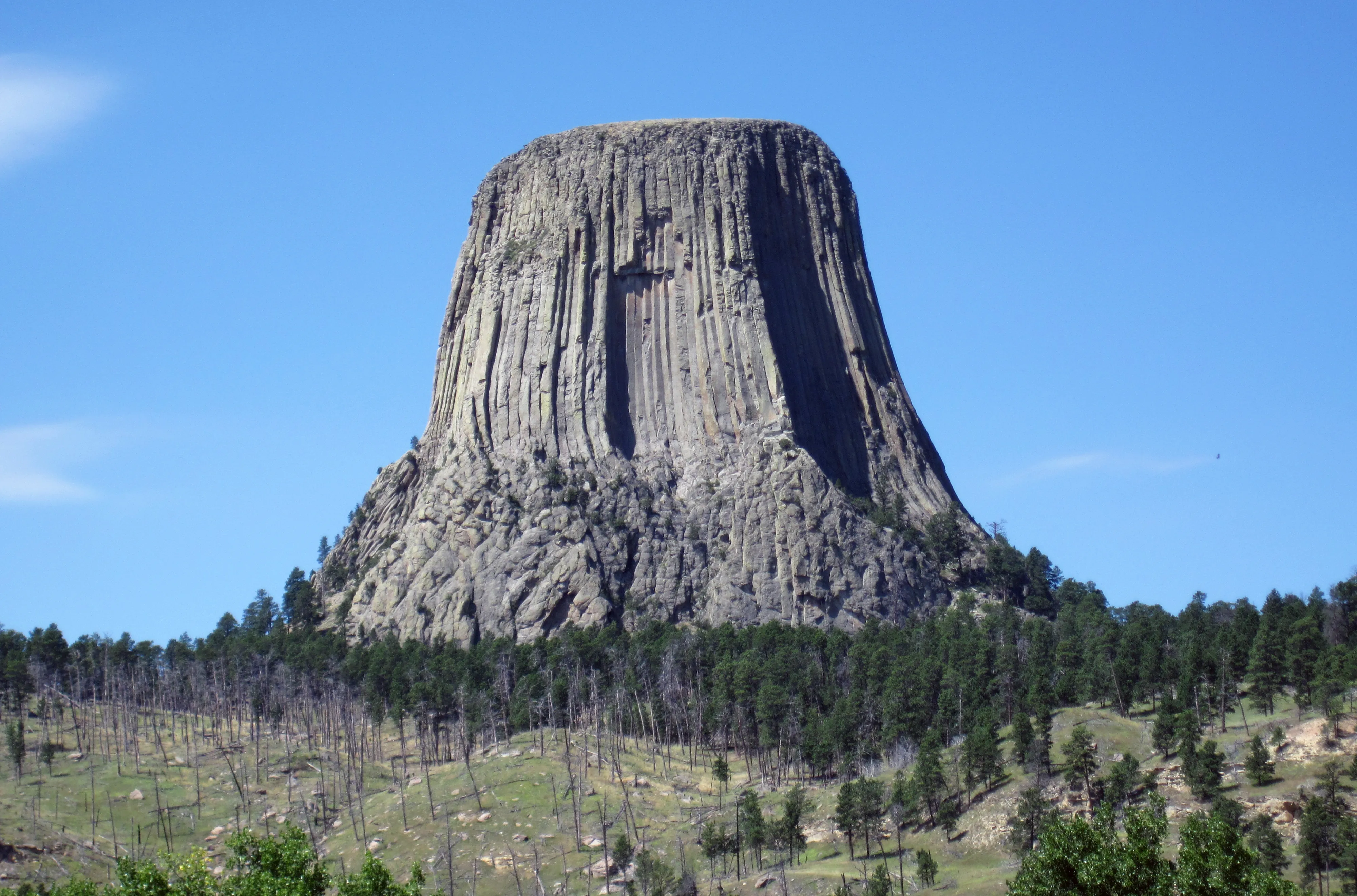
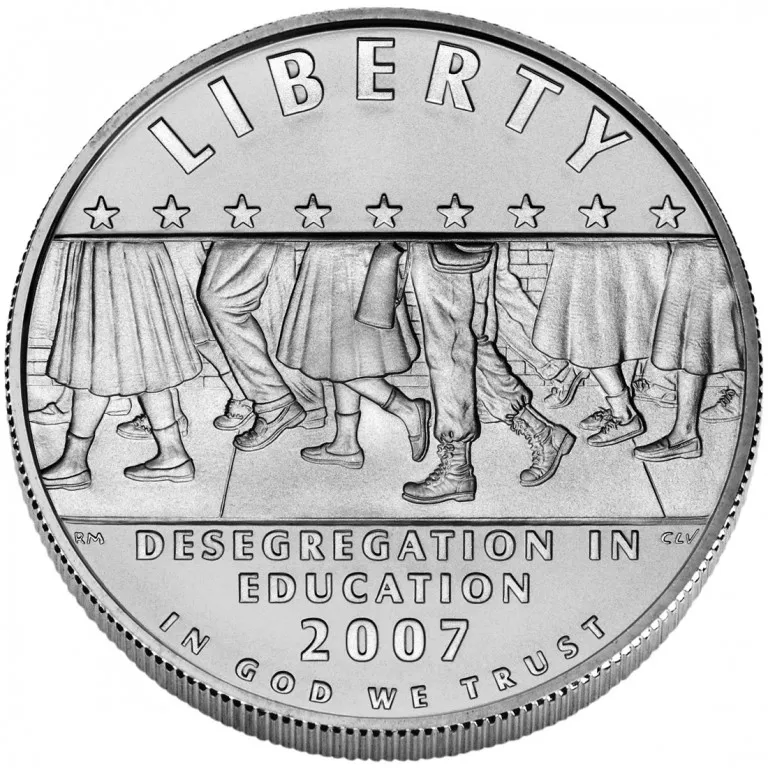
Start with 1964: ten months of rumor ended when Earl Warren's commission handed Lyndon Johnson a report built on 552 witnesses and 3,100 exhibits, concluding Oswald and Ruby each acted alone. The public wouldn't see it for three more days. Worth a longer look: 1957, when Eisenhower federalized the entire Arkansas National Guard and sent the 101st Airborne into Little Rock, stripping Faubus of his own troops in one order. Also on the shelf: Devils Tower, the first land any president protected by proclamation alone.
— The Patriot Compass desk
1964Featured · This day in history
Warren Commission hands Johnson its verdict: Oswald acted alone
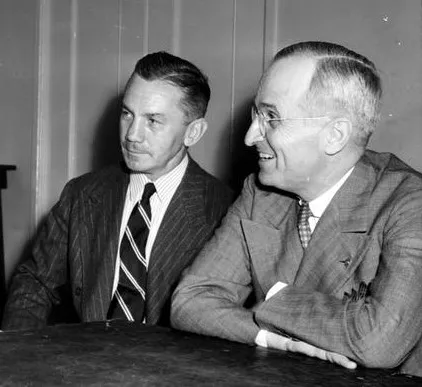
Ten months after Lee Harvey Oswald shot President Kennedy in Dallas and Jack Ruby shot Oswald two days later, rumors about a wider conspiracy were still circulating. On September 24, 1964, Chief Justice Earl Warren's commission delivered its finished report to President Lyndon Johnson at the White House. After taking testimony or depositions from 552 witnesses and reviewing more than 3,100 exhibits, the commission found that Oswald acted alone in killing Kennedy and that Ruby acted alone in killing Oswald. The public report followed three days later.
Johnson had created the commission by executive order within a week of the assassination, worried that unanswered questions could deepen public fear and suspicion. Commissioner John McCloy put the stakes plainly: the goal was to show the world America was not a place where a government could be changed by conspiracy. The report's conclusions have been debated ever since, but its release established the pattern the government would repeat after later national traumas: commission, report, official record.
Did you know
QWhy did Earl Warren initially refuse to lead the commission that bears his name?
Warren cited a principle of separation of powers, arguing that a sitting Chief Justice of the United States should not place the judiciary at the service of the executive branch. He turned Johnson down on those grounds. Johnson personally pressed him, warning that unanswered questions about the assassination could worsen international tensions or even risk war, since rumors were already circulating about Soviet or Cuban involvement. Warren relented only after Johnson invoked the nation's prestige directly. Commissioner John McCloy later echoed that same worry, framing the whole enterprise as proof that America was not a country where governments could be toppled by conspiracy. Warren's reluctance never became public knowledge at the time.
QWhat did CIA Director John McCone withhold from the very commission he was supposed to help?
A 2014 CIA internal history by Chief Historian David Robarge revealed that Director John McCone ran what the report called a 'benign cover-up,' instructing agency officers to give the commission only 'passive, reactive, and selective' assistance. Left out entirely were the CIA's own Mafia-linked plots to assassinate Fidel Castro, information that might have suggested a motive for Kennedy's murder. The same report suggested the agency may have concealed earlier contact with Oswald before 1963. Robarge's own conclusion was blunt: McCone's silence about the anti-Castro schemes probably did more damage to the commission's credibility than any other single failure.
QHow did Congressman Gerald Ford end up feeding information back to the FBI while serving on the commission meant to be independent?
A 1963 FBI memo, not released to the public until 2008, shows that commission member Gerald Ford stayed in direct contact with the bureau throughout the investigation, relaying details of the panel's internal activities to Deputy Director Cartha DeLoach. Ford would go on to become the 38th president more than a decade later. At the time, the arrangement gave Hoover's FBI a private window into commission deliberations that other members and the public did not know existed. The memo surfaced decades after Ford's death, adding a previously undocumented wrinkle to how the supposedly independent panel actually operated behind closed doors.
The Daily Record · free by email
Tomorrow's edition in your inbox — one story, one quote, the flag.
1789government
Washington signs the Judiciary Act; the Supreme Court gets a chief justice and five associates
The Constitution had promised one Supreme Court but left everything else to Congress: how many judges, what lower courts, what powers. On September 24, 1789, George Washington signed the Judiciary Act, fixing the Court at a chief justice and five associates and building thirteen judicial districts beneath it, each with its own district court. The act also created circuit courts, the Office of Attorney General, and U.S. marshals and attorneys for every district. Immediately after signing, Washington sent the Senate his first slate of nominees to fill the six seats.
The Judiciary Act answered a fight the Constitution had left open: Anti-Federalists feared a national judiciary would swallow state courts. Washington's signature settled it in favor of federal power, and one clause, the right to remove suits into federal court, was called by legal historian Edward A. Purcell Jr. "the most significant innovation" in the Act, asserting national judicial supremacy that still structures American litigation today.
Did you know
QHow many times has Congress changed the size of the Supreme Court since 1789?
Congress has adjusted the Court's membership at least six times. An 1801 law would have shrunk it to five justices at the next vacancy, but an 1802 law canceled that before it happened, holding the bench at six. Congress then expanded it to seven in 1807, nine in 1837, and ten in 1863. An 1866 law aimed to cut the Court back to seven through attrition, and two of three needed vacancies actually occurred before the Judiciary Act of 1869 stepped in and fixed the number at nine, where it has stood ever since. The 1789 baseline of six justices lasted less than two decades before Congress started tinkering with it.
QWhat dollar amount did Congress set as the threshold for a circuit court to hear a civil case?
The 1789 act drew a hard line at $500. Circuit courts could only take original jurisdiction over civil disputes involving diversity of citizenship, or suits where the United States was the plaintiff, if the amount in controversy hit that figure. District courts, by contrast, handled the smaller stuff: suits brought by the United States needed only $100 to qualify, alongside admiralty cases and petty crimes. The gap between $100 and $500 effectively sorted which federal court a dispute landed in, a bureaucratic threshold with no equivalent in the Constitution, which said nothing about dollar amounts.
QHow long did the Court of Appeals in Cases of Capture operate before the Constitution created a permanent judiciary?
Before the Constitution existed, the Continental Congress had already run a national court under the Articles of Confederation. The Court of Appeals in Cases of Capture, established to handle disputes over captured enemy ships, was the first United States court ever created, established years before the Constitutional Convention, predating the Judiciary Act. Congress under the Articles also stood up tribunals to referee state-versus-state border fights, including Connecticut against Pennsylvania and New York against Massachusetts, plus a court for the Northwest Territory. Washington's 1789 act did not invent federal courts from nothing. It replaced an older, patchwork system that Article IX of the Articles of Confederation had authorized years before the Constitutional Convention ever met.
2023science
A capsule from Bennu drops onto the Utah desert, a minute ahead of schedule
Seven years after launch, NASA's OSIRIS-REx spacecraft finally released its cargo. At 4:42 a.m. MDT on September 24, 2023, OSIRIS-REx ejected the sample return capsule, which later touched down at the Utah Test and Training Range at about 8:52 a.m. MDT at just 11 mph, one minute earlier than mission planners had predicted. A wiring mistake kept the drogue parachute from deploying at 100,000 feet, but the main chute opened anyway at 9,000 feet and held despite the extra speed. Helicopters lifted the capsule out by 10:15 a.m.
A NASA-led spacecraft, tracked by a University of Arizona-run science team, brought home the largest asteroid sample ever collected by any nation, more than twice the mission's goal. The touchdown gave American labs first crack at material scientists call a preserved sample of the solar system's early chemistry, Within two years, that work turned up amino acids and DNA's four nucleobases.
Did you know
QWhy does a third-grader's asteroid name reference a heron rather than a mythological bird outright?
North Carolina third-grader Michael Puzio won a 2012 naming contest run by the University of Arizona, The Planetary Society, and the LINEAR Project, beating out more than eight thousand entries from students worldwide. Puzio proposed Bennu because the OSIRIS-REx spacecraft's extended TAGSAM sampling arm reminded him of the Egyptian deity Bennu, which mythology typically depicts as a heron. The asteroid had carried the placeholder designation 1999 RQ36 since its discovery by the LINEAR Project on September 11, 1999. Every surface feature later mapped on the asteroid, including craters, ridges, and boulders, was subsequently named after birds or bird-like mythological figures to match the theme Puzio started.
QHow close did OSIRIS-REx actually fly to Bennu before touchdown, and how does that compare to a famous comet mission?
OSIRIS-REx settled into orbit around Bennu at just 1.75 kilometers, later tightening to about 1 kilometer, a distance so close it set a record for the closest orbit of any celestial object by any spacecraft. That beat the European Rosetta probe's orbit of comet 67P/Churyumov-Gerasimenko, which held its distance at roughly 7 kilometers. At that tight radius around tiny Bennu, one full orbit took the spacecraft 62 hours to complete. Ground teams needed that proximity because Bennu's gravity is so weak that normal orbital mechanics used for planets or larger bodies simply do not apply the same way.
QWhat almost derailed the sample collection before the spacecraft ever touched Bennu's surface?
Engineers ran two full rehearsals before committing to the real touch-and-go maneuver, first descending to 65 meters above the Nightingale site on April 15, 2020, then to just 40 meters on August 11, 2020. The original collection date of August 25, 2020, got pushed back to October 20 to allow more preparation time. During the actual descent, the spacecraft fired minimal thrusters to avoid contaminating Bennu's surface with unreacted hydrazine propellant, and its solar arrays were locked into a Y-shaped configuration in case the spacecraft tipped up to 45 degrees on contact. The touchdown itself landed within 92 centimeters of the targeted spot, a margin of precision aimed at a crater roughly the size of a few parking spaces.