Reading 3 of 6 free1776 Club · all 6 storiesSaturday, September 19
From the desk
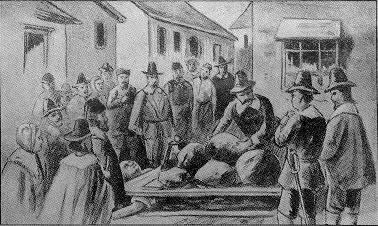
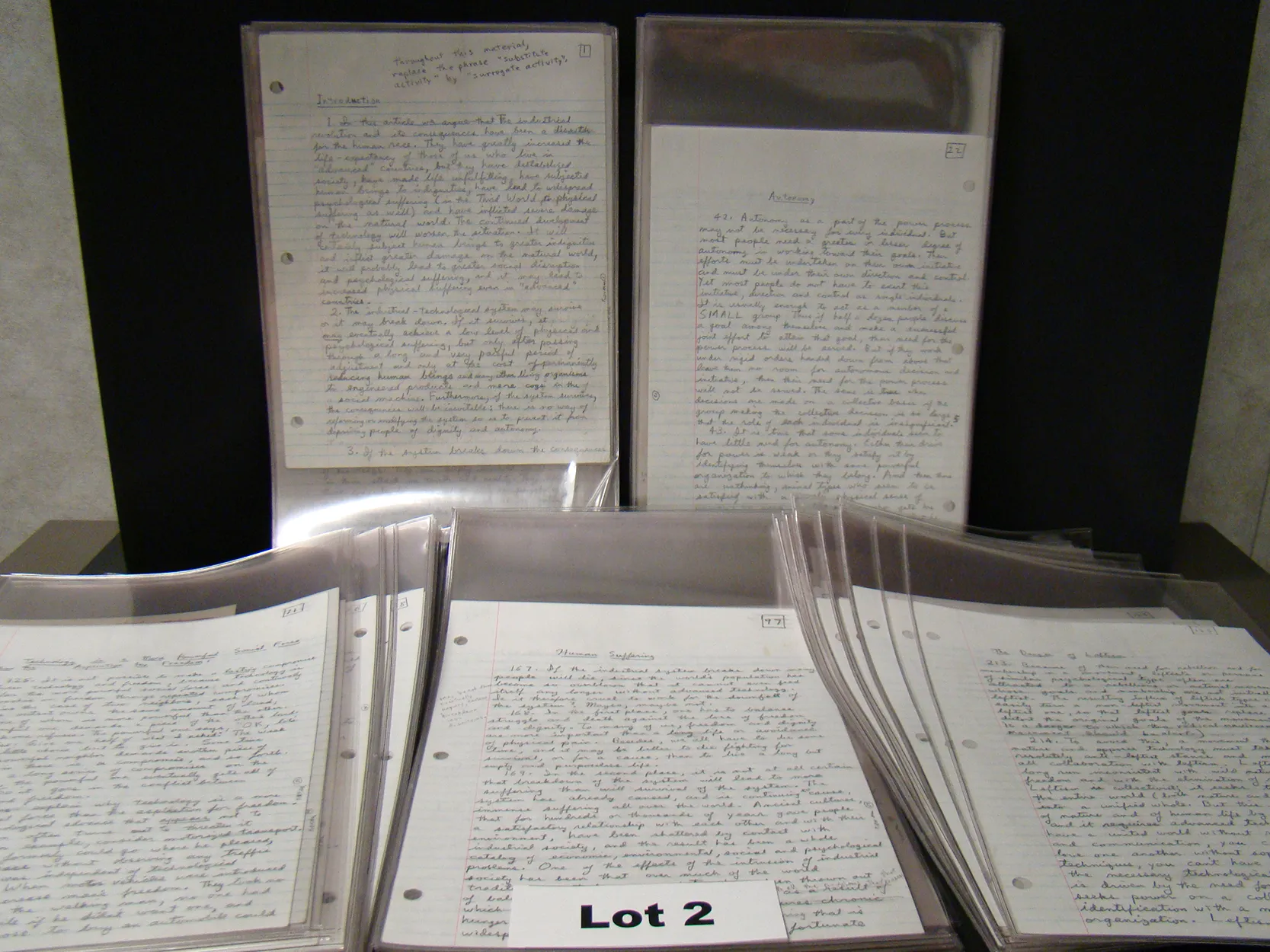
Start with 1796: Philadelphia had spent weeks guessing whether Washington would run again, and on September 19 Claypoole's American Daily Advertiser answered it in print, running his Farewell Address in full. Papers across the states reprinted it within days, carrying his warnings on parties and foreign entanglements to readers who'd never set foot near the capital. Worth a longer look: 1995, when the Washington Post ran Kaczynski's 35,000-word manifesto whole, betting that someone who knew his voice would read it and call in. Giles Corey's death under stones in 1692 rounds out a heavier edition than most.
— The Patriot Compass desk
1796Featured · This day in history
Washington tells the country, in print: I am not running again
For weeks, Philadelphia had wondered whether Washington would seek a third term. On September 19, 1796, the question was answered in print: Claypoole's American Daily Advertiser published his Farewell Address in full, an open letter announcing his retirement and offering the country his last political advice. Newspapers across the states reprinted it almost immediately. Washington's warnings about parties and foreign entanglements reached homes far from the capital.
Washington's choice to step aside after two terms, printed for every reader to see, set an unwritten rule. American presidents followed it for a century and a half before the 22nd Amendment made it law. No European power of the era had a comparable ritual: a head of state simply publishing his own exit.
Did you know
QDid Washington ever admit doubts about his own qualifications for the presidency?
Yes, and in blunt terms. Washington wrote that he had "truly believed" he was never qualified to be president, and credited any success of his administration not to himself but to the people around him, saying it came "as a result of their support and efforts to help the country survive and prosper." That admission never appeared in the Farewell Address's public warnings about parties or foreign alliances, but it echoes the same modest self-assessment Washington offered throughout the letter. The line stands apart from the Address's political advice, offering a rare glimpse of Washington grading his own performance in the job he was about to leave for good.
QWhat did Washington predict would happen to the Constitution after he left office?
He warned that the union created by the Constitution would face "the most frequent and focused attacks by foreign and domestic enemies of the country," a prediction aimed squarely at threats from both outside and inside American borders. This went further than his general caution about factions, naming the Constitution itself as the target future enemies would attack, not just the government or the presidency. Washington framed the document as something that would need active defense long after he was gone, not a settled achievement that could simply be trusted to endure on its own.
QHow did Washington describe the personal risk faced by Americans who resisted foreign influence?
He warned that genuine patriots who resisted foreign intrigue could become targets themselves, writing that "real patriots" who resist the intrigues of foreign nations "may find themselves suspected and odious" to their own countrymen. Despite that risk, he urged Americans to "stand firm against such influences all the same." The line suggests Washington expected loyalty to be punished, not rewarded, in the short term, with suspicion falling on those who refused foreign entanglements rather than on the foreign powers doing the courting.
The Daily Record · free by email
Tomorrow's edition in your inbox — one story, one quote, the flag.
1778government
Congress puts a number on the war: the first federal budget passes in Philadelphia
By the fall of 1778, the Continental Congress had been paying for a war for three years with no coordinated financial plan. On September 19, 1778, delegates meeting in the Pennsylvania State House in Philadelphia passed the first federal budget, an attempt to set spending and revenue for the fledgling government and its army. There was no treasury department and no national currency worth much, and Congress had no power to tax anyone to make the numbers real. The vote set numbers on paper, but the problem of paying for them stayed unsolved for years.
This was the first time an American government tried to put its finances on paper as a single document, a practice Congress has continued in some form ever since. The 1778 budget could not be enforced because Congress had no power to tax, a structural weakness that persisted under the Articles of Confederation and helped drive the push for the Constitution a decade later. Modern budget fights in Washington are a distant descendant of this same problem: spending plans without guaranteed money to back them.
Did you know
QWhy did the Continental Congress end up back in the same building where independence was declared?
The British army had occupied Philadelphia during the war, forcing the Congress to relocate to York, Pennsylvania, for safety. When the British withdrew, the Congress moved back into Philadelphia on July 2, 1778, and resumed meeting in the Pennsylvania State House, the building later renamed Independence Hall. Barely two months later, the same room hosted the vote on the first federal budget. The same room that hosted the declaration now hosted the quieter work of figuring out how to pay for the war it started.
QWhere can you actually read the debate that led to the 1778 budget vote?
The full proceedings of the Continental Congress, including the day-by-day record from September 1778, are preserved in the journals of the Continental Congress, now held in the Library of Congress. These journals are the primary paper trail for a government that otherwise left behind almost no ceremonial record of its financial decisions. No signing ceremony marked the budget's passage, and no single treasury official was appointed to carry it out. The journals are still the main record historians use to piece together how, or whether, the army actually got paid.
QWhat government body existed at the time to enforce the 1778 budget?
None. The Articles of Confederation, which would formally organize the national government's powers, did not take effect until March 1, 1781, more than two years after this budget passed. Until then, the Continental Congress operated on the principles of that framework without the legal authority it granted, meaning it could set a budget but could not force any state to fund it. That gap between planning and power stayed unresolved through the rest of the war and fed directly into the case for scrapping the Articles.
1944military
American troops push into the Hürtgen Forest, aiming for a village called Schmidt
By September 1944, the Allied sprint across France had stalled at the German border, slowed by long supply lines and stiffening resistance near Aachen. On September 19, U.S. First Army troops under Courtney Hodges moved into the Hürtgen Forest, a 54-square-mile tangle of firs east of the Belgian-German border, aiming to take the village of Schmidt and clear Monschau. German defenders had prepared the area with minefields, barbed wire, booby-traps, and, in the southern forests, concrete bunkers belonging to the Siegfried Line. The advance that began that day ground on for eighty-eight days.
Hürtgen became the U.S. Army's second-longest single battle, after Bataan, and one of its costliest in Europe. The fight exposed how badly American planners had misjudged terrain that neutralized air power and armor alike, a lesson that shaped how planners later weighed terrain before committing armor and air support.
Did you know
QDid enemies ever pause the fighting in the Hürtgen Forest to treat the wounded?
Yes, at the Kall Bridge. Between November 7 and 12, a German regimental doctor named Hauptmann Günter Stüttgen negotiated an unofficial ceasefire so that medics could recover and treat wounded soldiers from both sides stranded along the crossing. There was no formal agreement between headquarters, just an arrangement worked out on the ground between officers who needed the killing to stop long enough to save their men. The truce held for five days in one of the war's deadliest corners before combat resumed. It was one of the few organized truces recorded during the battle.
QHow many American soldiers died in a single 48-hour stretch near the end of the campaign?
More than 300 soldiers of the 1st Infantry Division were killed in action on just November 29 and 30, 1944, during fighting at Langerwehe-Merode. That two-day toll came weeks after the battle had already ground on for over two months. The 1st Infantry Division was one of several units rotated into the forest as earlier divisions were bled down, and its losses at Langerwehe-Merode came even as German attention was shifting toward the coming Ardennes offensive.
QWhat was the total American casualty bill for the wider campaign the Hürtgen fighting belonged to?
The Siegfried Line campaign, of which Hürtgen was one battle, cost American forces close to 140,000 casualties overall. That figure dwarfs the 33,000-to-55,000 range attributed to Hürtgen alone, putting the forest fighting into a much larger and bloodier context of attritional combat along Germany's western defenses. Hürtgen, brutal as it was, represented only a fraction of the human cost the U.S. Army absorbed in 1944 while trying to breach fortified German ground before the Rhine could even come into view.